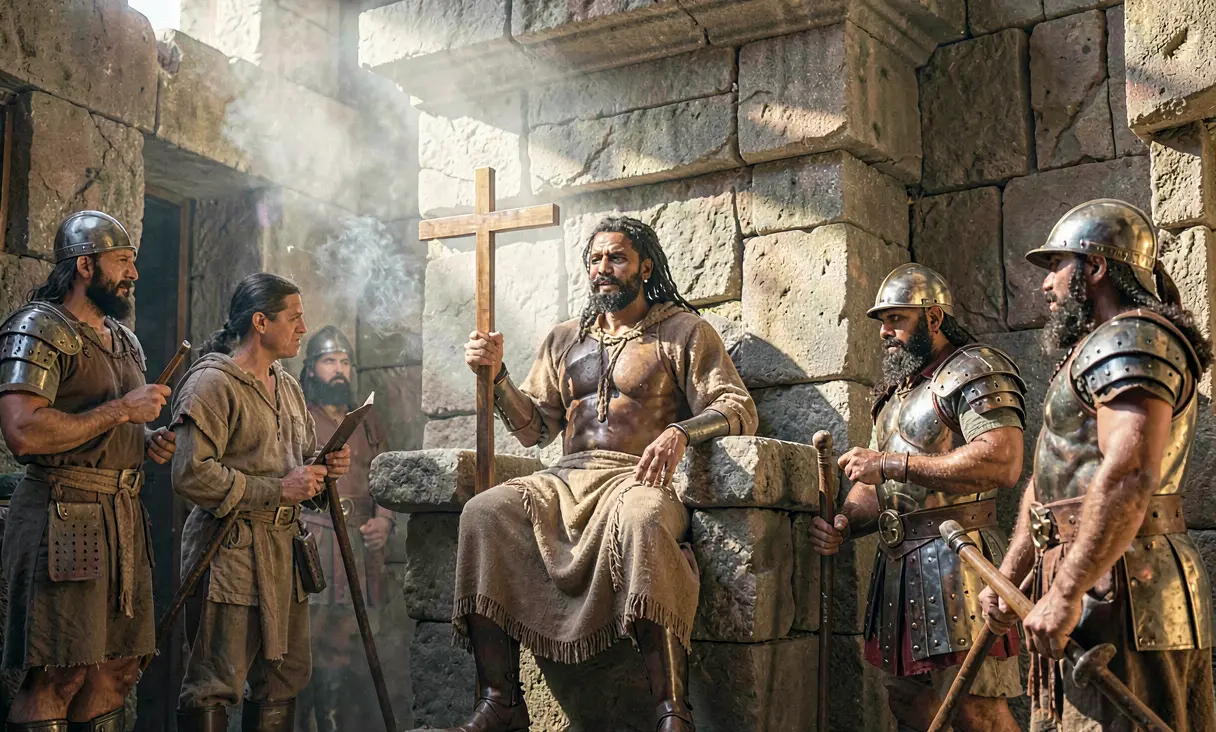
King Ezana Declares Aksum a Christian Kingdom
King Ezana's c. 330 CE conversion made Aksum one of the world's first Christian states, forging a unique religious identity that endures in Ethiopia today.
The Pagan Foundations of Aksum
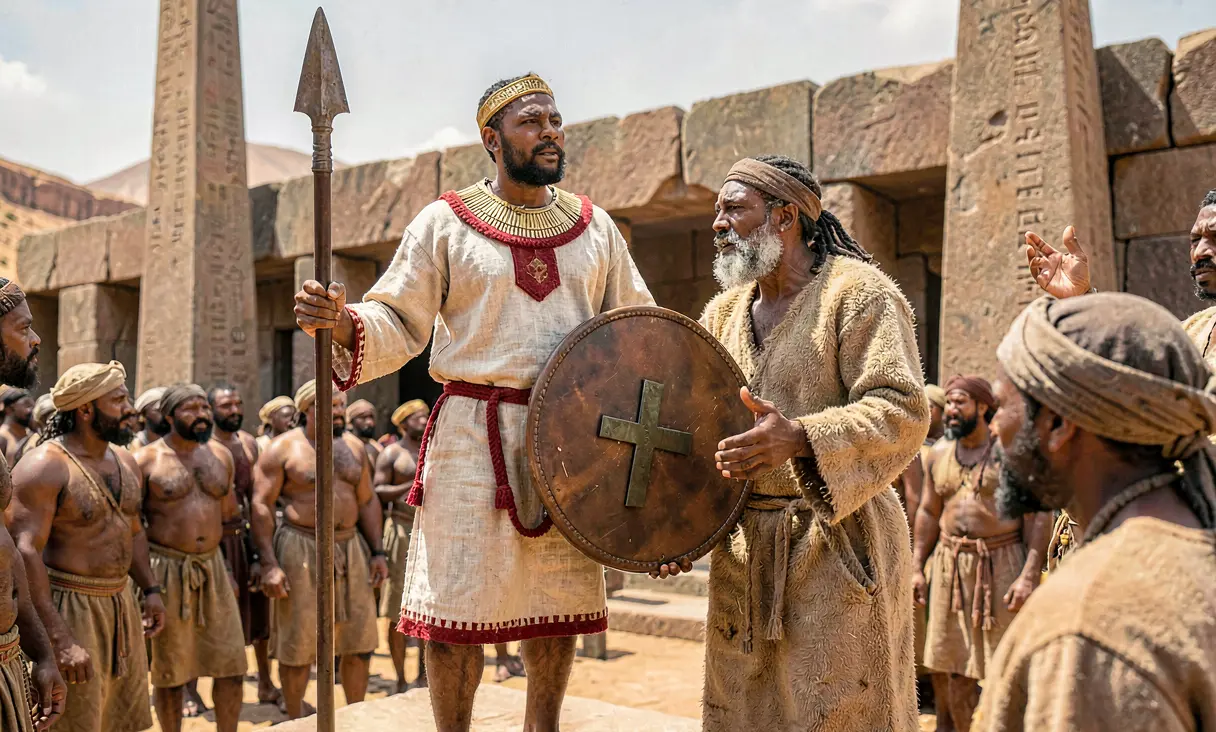
Prior to the mid-4th century, the Kingdom of Aksum stood as a preeminent maritime and commercial power controlling the Red Sea trade routes between Rome and India. The state religion was a complex polytheistic system centered on the sky god Mahrem (Ares), whose worship was deeply intertwined with royal authority and military conquest. Inscriptions from the reigns of kings like Ezana's predecessor, Ousanas, frequently invoked Mahrem as the divine patron of victory, with the king acting as his earthly representative. The capital city, Aksum, was adorned with massive granite stelae and temples dedicated to these traditional deities, reflecting a society where religious orthodoxy and state expansion were inextricably linked.
The Arrival of Frumentius
The catalyst for the kingdom's spiritual transformation was the arrival of two Syrian Greeks, Aedesius and Frumentius, who were shipwrecked on the Red Sea coast around 320 CE. Taken to the Aksumite court as young slaves, they rose through the ranks; Aedesius became the king's cupbearer, while Frumentius served as secretary to Queen Atsbeha and tutor to the crown prince, Ezana. During this formative period, Frumentius introduced Christian teachings to the royal household, fostering a theological environment that would eventually challenge the entrenched polytheism of the court. His influence was not merely educational but political, positioning Christianity as a viable alternative for a kingdom seeking new diplomatic and economic alliances.
The Royal Conversion
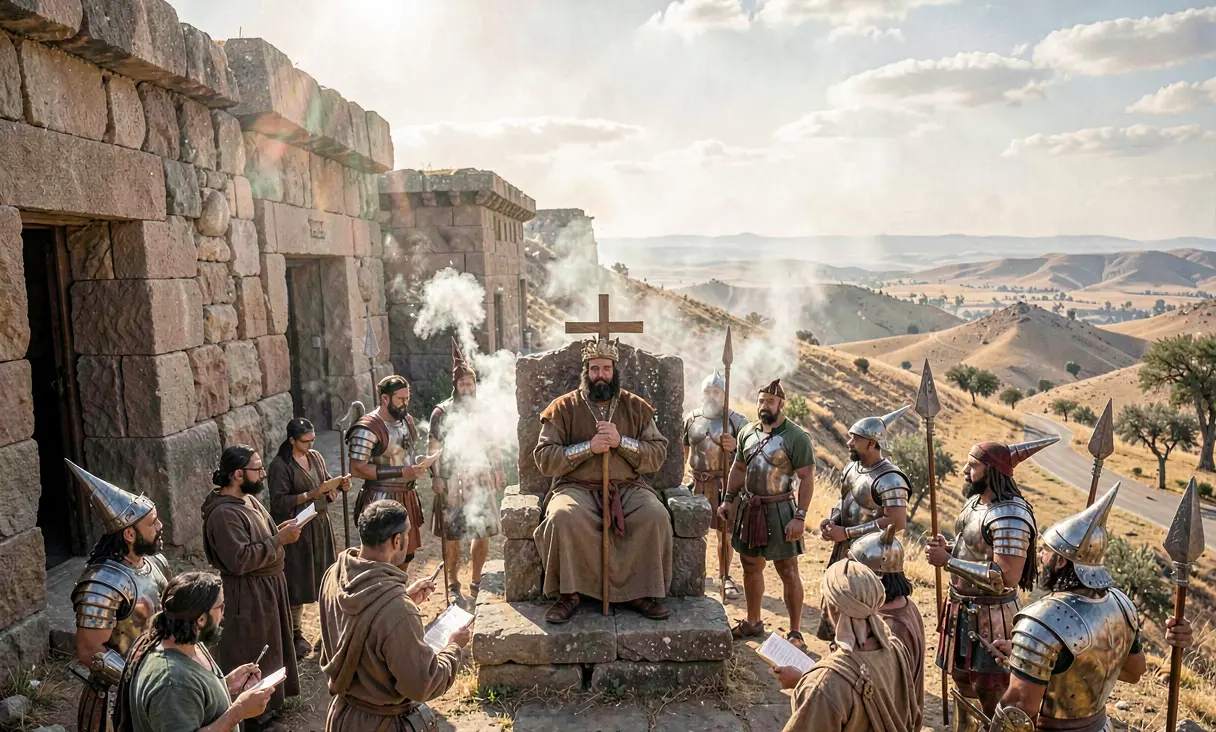
Upon ascending the throne around 325 CE, King Ezana initially maintained traditional religious practices, evidenced by early inscriptions invoking Mahrem. However, by approximately 330 CE, a decisive shift occurred. Ezana formally declared Christianity the state religion, a move documented through a series of monumental inscriptions carved in Ge'ez and Greek. These texts explicitly replaced references to 'the Lord of Heaven' (Mahrem) with invocations to the Christian God, often phrased as 'by the power of our Lord Jesus Christ.' This was not a passive adoption but an active, state-sponsored reorientation of the kingdom's identity, aligning Aksum with the expanding influence of the Roman Empire under Constantine and the theological authority of Alexandria.
Frumentius as the First Bishop
Following his conversion, Ezana dispatched Frumentius to Alexandria to request a bishop for the newly Christianized kingdom. Patriarch Athanasius of Alexandria, recognizing the strategic and spiritual significance of this development, consecrated Frumentius as the first Bishop of Aksum, bestowing upon him the title 'Abba Salama' (Father of Peace). This act formally integrated Ethiopia into the Coptic Church's ecclesiastical hierarchy. The appointment was crucial; it ensured that the Ethiopian church would maintain its distinct theological lineage while remaining in communion with the broader Christian world, specifically under the jurisdiction of the Alexandrian patriarchate for centuries to come.
Diplomatic and Economic Realignment
The conversion to Christianity served as a powerful diplomatic tool, solidifying Aksum's relationship with the Byzantine Empire and other Christian Mediterranean powers. It facilitated smoother trade relations and cultural exchange, distinguishing Aksum from its pagan neighbors in Arabia and Nubia. The adoption of the faith allowed Aksumite merchants to integrate more seamlessly into the Christian economic networks of the Red Sea and Indian Ocean. Furthermore, the shift helped legitimize Ezana's rule internally by presenting him as a divinely chosen monarch under the protection of the Christian God, thereby consolidating his authority over diverse ethnic groups within the empire.
Enduring Legacy of the Ethiopian Orthodox Tradition
The conversion of Ezana established Ethiopia as one of the earliest states in history to adopt Christianity as its official religion, predating many European nations by centuries. This event laid the foundation for the unique Ethiopian Orthodox Tewahedo Church, which preserved ancient Semitic liturgical traditions and developed a distinct cultural identity that survived the rise of Islam and subsequent isolation from Europe. The legacy is visible today in the rock-hewn churches of Lalibela and the continuous existence of Aksum as a holy city. Ezana's decision transformed a regional power into a spiritual beacon, ensuring that Christianity would remain a central pillar of Ethiopian national identity for nearly 1,700 years.
Established Ethiopia as one of the world's oldest continuous Christian nations and integrated it into late antique religious networks.
Where it happened
Aksum, Ethiopia — see it on the interactive map →
Explore related history
 ReligionConstruction of the Temple of Kukulcán at Chichén Itzác. 800 CE · Chichén Itzá, MexicoThe iconic pyramid dedicated to the feathered serpent god is built during the Puuc-Toltec fusion period.
 ReligionBuddha Attains Enlightenmentc. 528 BCE · Bodh Gaya, IndiaSiddhartha Gautama achieves nirvana under the Bodhi tree founding Buddhism.
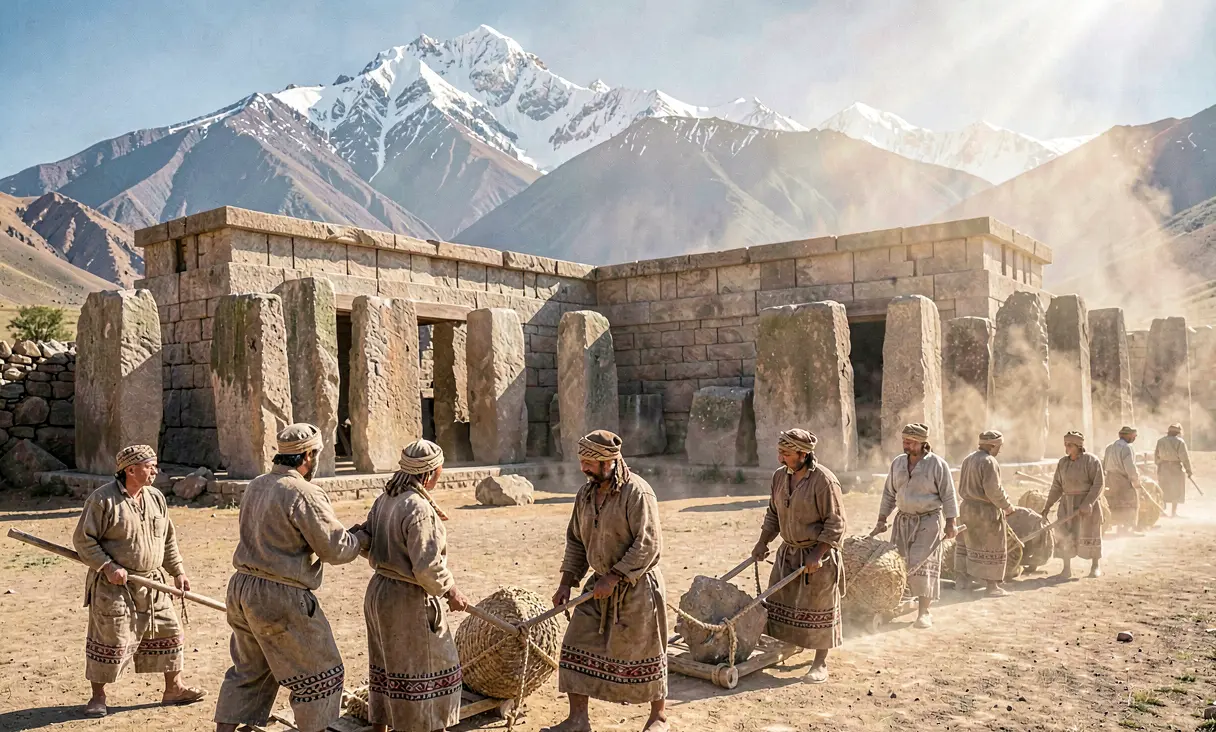 ReligionConstruction of Kalasasaya Temple at Tiwanakuc. 500 CE · Tiwanaku, BoliviaThe Kalasasaya temple is built with monolithic stones for solar observance.
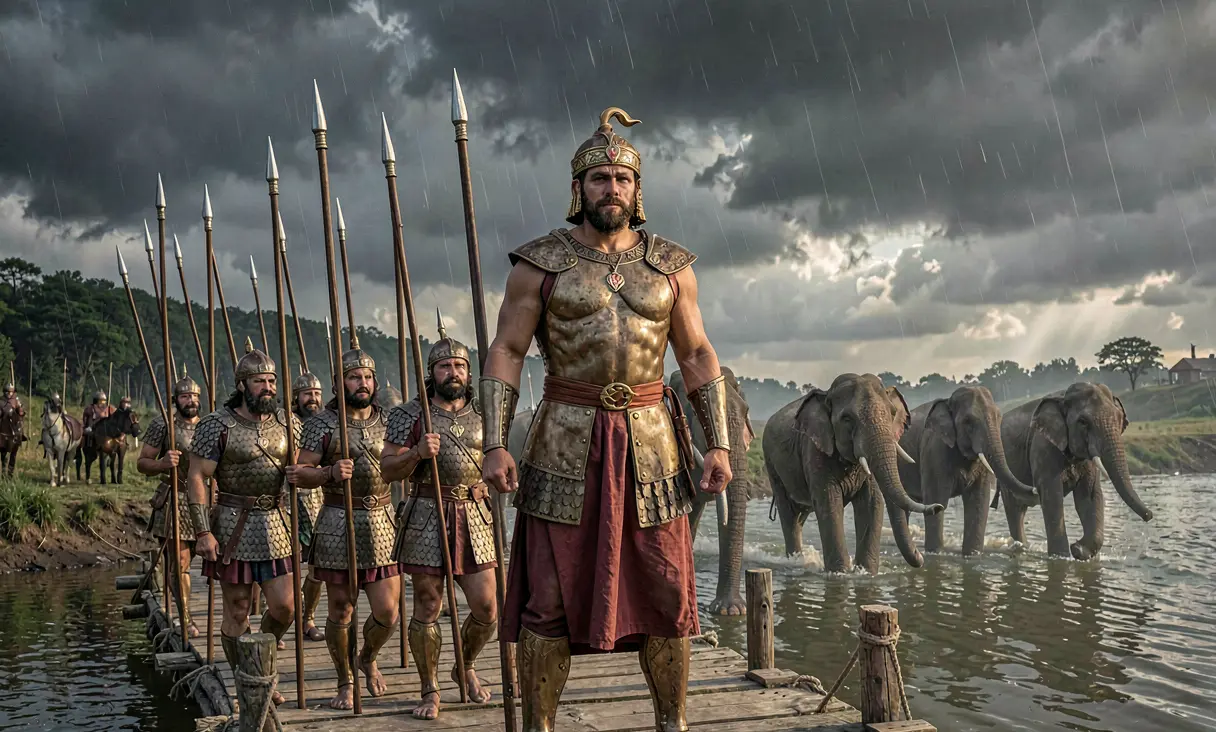 WarAlexander the Great Crosses the Indus Riverc. 326 BCE · Attock (modern Pakistan)Alexander crosses the Indus and defeats King Porus at the Battle of the Hydaspes, expanding his empire to the edge of South Asia.
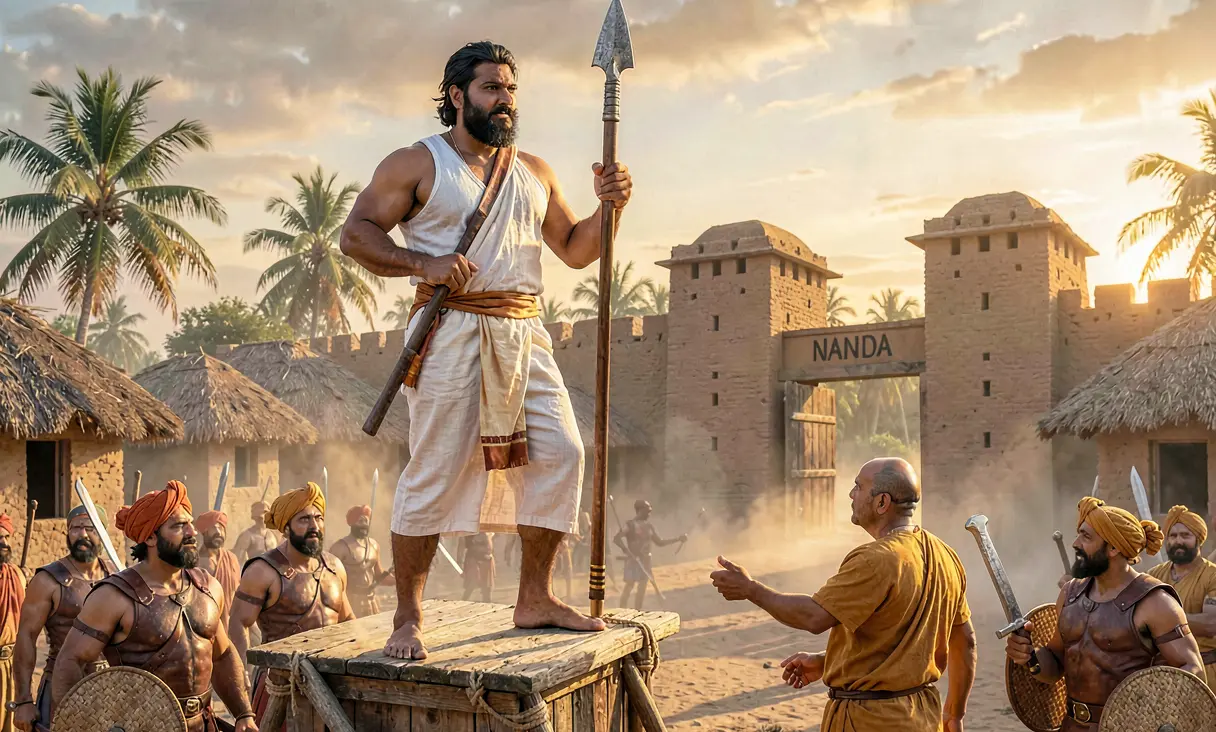 PoliticsChandragupta Maurya Founding the Mauryan Empirec. 321 BCE · Pataliputra (modern Patna/India)Chandragupta Maurya defeats the Nanda Dynasty with the help of Chanakya, establishing India's first pan-continental empire.
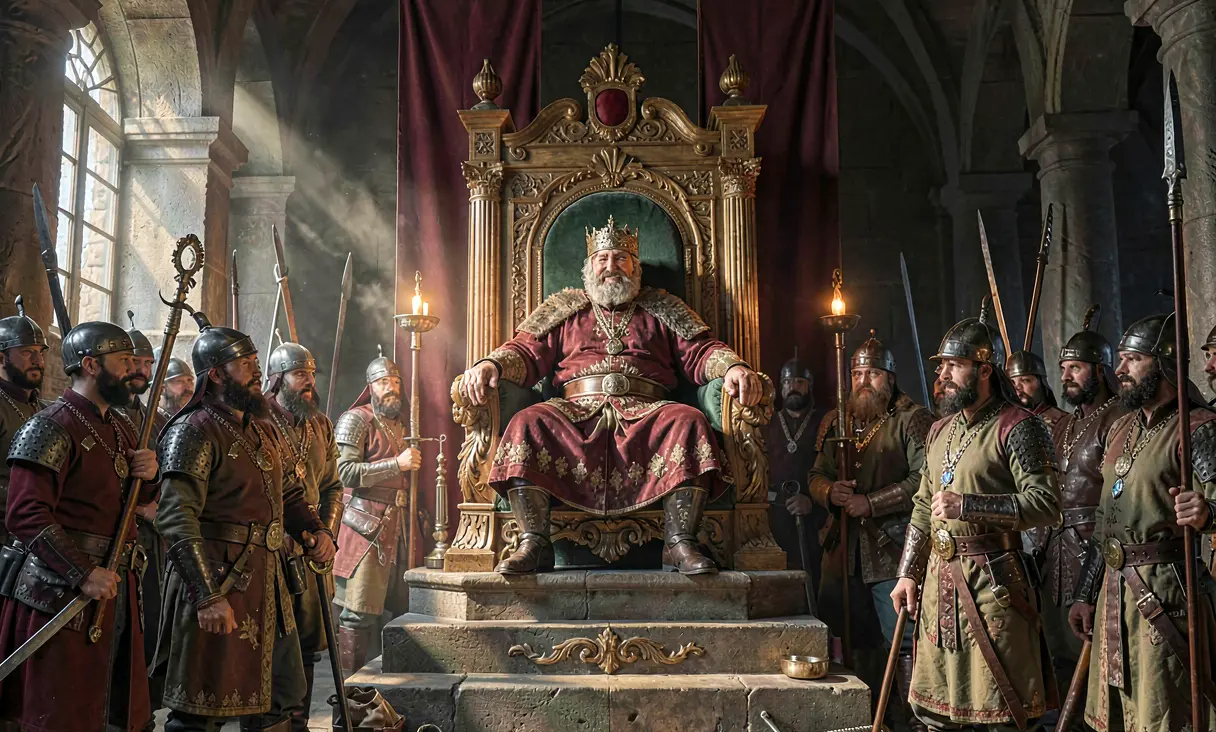 PoliticsAscension of the Nanda Dynastyc. 345 BCE · Pataliputra (modern Patna/India)Mahapadma Nanda overthrows the Shishunaga dynasty, establishing a vast empire and creating the first large-scale state in India.
Discussion
Loading…