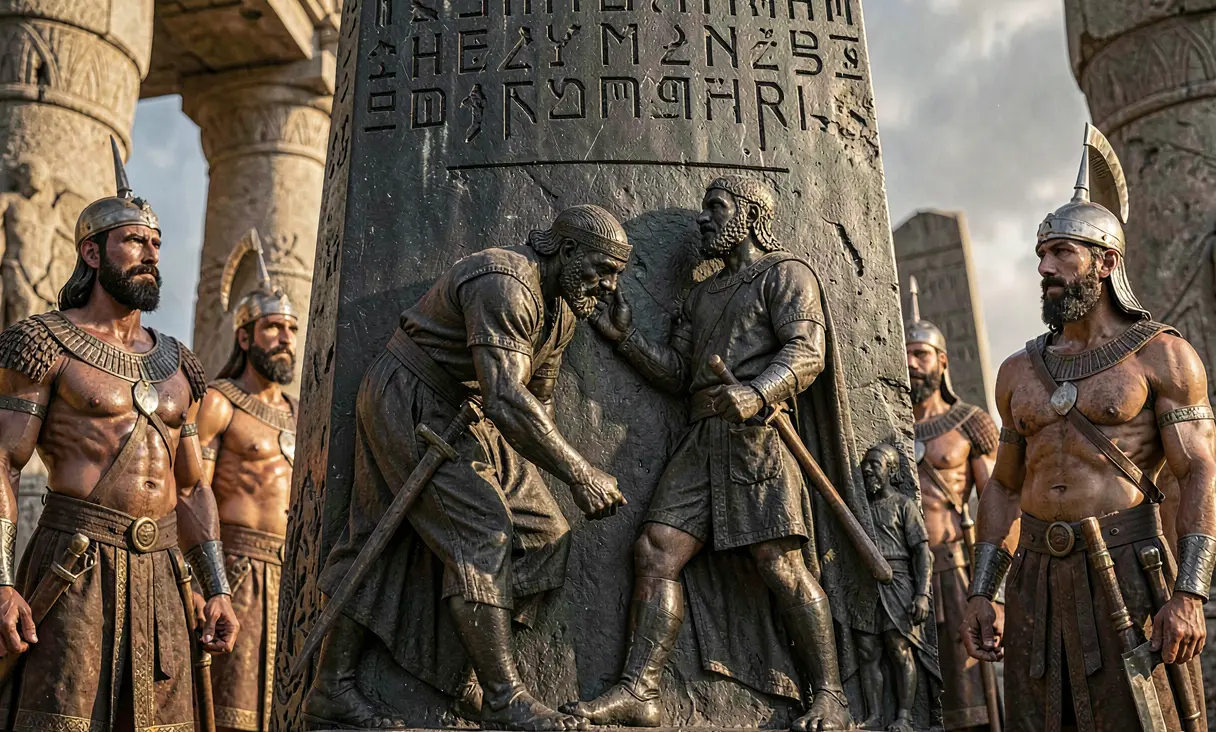
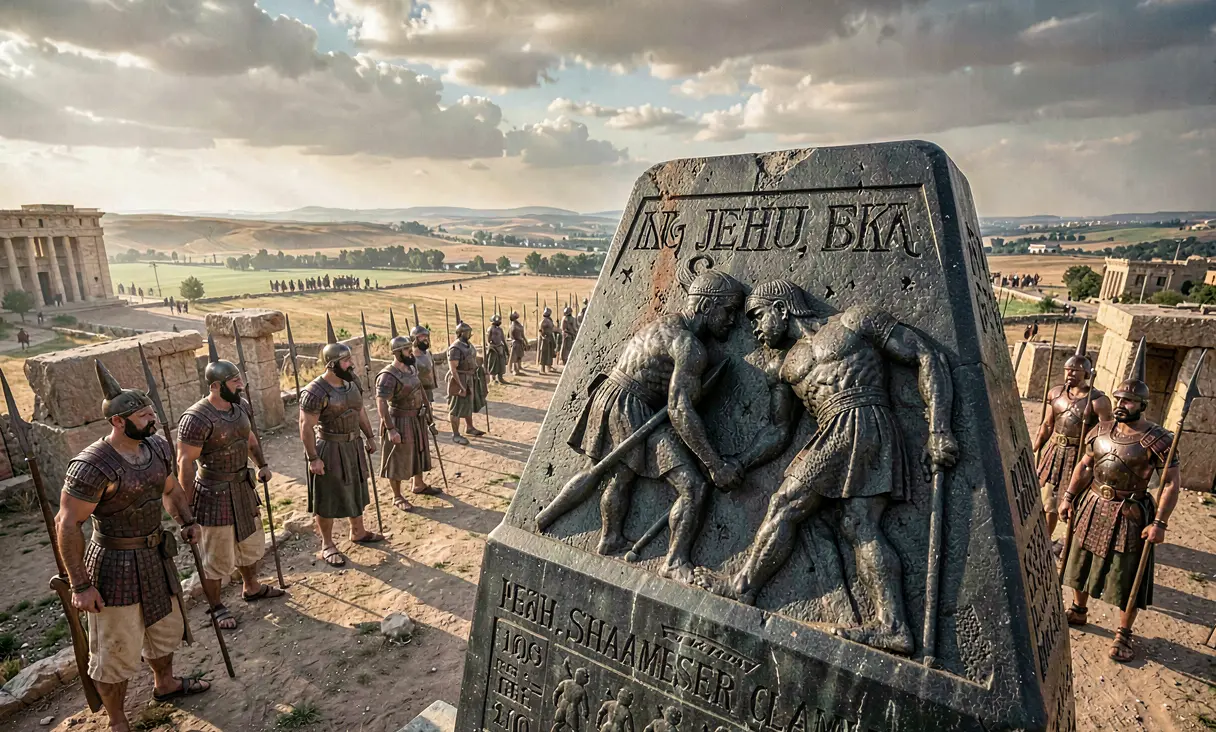
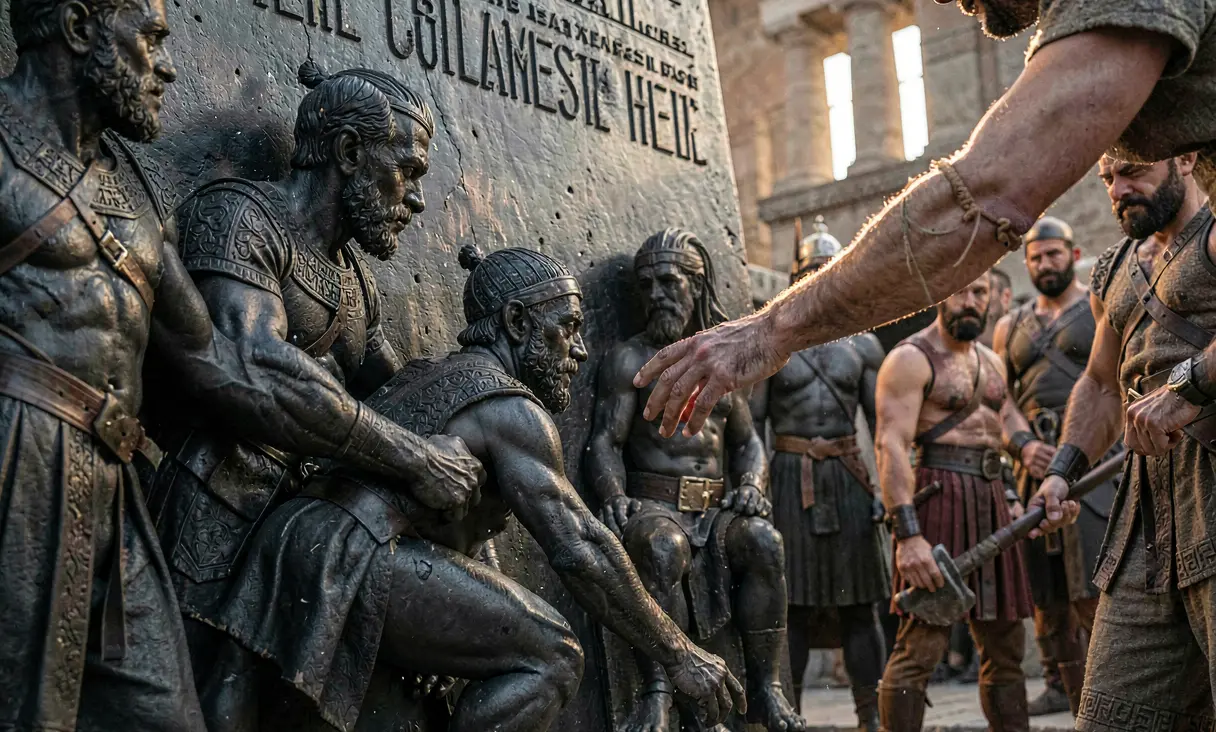
Erection of the Black Obelisk by Shalmaneser III
The Black Obelisk provides the only contemporary visual depiction of an Israelite king, anchoring biblical chronology and confirming 9th-century BCE geopolitical realities.
The Imperial Vision of Shalmaneser III
In the mid-9th century BCE, the Neo-Assyrian Empire stood at the zenith of its early expansionist phase under King Shalmaneser III (r. 858–824 BCE). Unlike his predecessors who focused on consolidating power within Mesopotamia, Shalmaneser pursued an aggressive policy of westward expansion into the Levant, aiming to secure trade routes and exact tribute from the fragmented city-states and kingdoms of Syria and Palestine. To immortalize these conquests and project an image of unassailable divine favor, the king commissioned monumental art that would serve as both a historical record and a psychological tool of domination. Among these works, the Black Obelisk stands as the most sophisticated and informative, carved from black limestone and standing approximately two meters tall.
Unearthing the Stone of Nineveh
Discovered in 1846 by the British archaeologist Sir Austen Henry Layard at the ancient site of Kalhu (modern-day Nimrud), not Nineveh as previously assumed, this artifact was originally erected in the palace courtyard to commemorate Shalmaneser's military achievements. The obelisk is unique among Assyrian monuments for its four sides, each featuring a series of bas-relief panels accompanied by cuneiform inscriptions known as the 'Annals.' These texts meticulously list the king's campaigns year by year, detailing battles against Aram-Damascus, the Hittites, and various Arab tribes. The visual narrative complements the text, depicting scenes of tribute processions where foreign dignitaries prostrate themselves before the Assyrian monarch, a standard iconographic motif designed to emphasize the absolute submission of vassals.
The Encounter with Jehu of Israel
The most historically significant panel on the obelisk is found on the second register of the first side. It depicts a bearded figure, identified by the accompanying cuneiform inscription as 'Jehu, son of Omri' (Ya'u mar Bit-Humri), bowing in deep prostration before Shalmaneser III. The king of Israel offers tribute consisting of silver, gold, a golden bowl, golden basins, tin, and a staff of the royal hand. This depiction is unparalleled; it represents the only contemporary visual representation of an Israelite king known from ancient Near Eastern art. While biblical texts describe Jehu's rise to power through a coup against the House of Omri, the obelisk confirms his political reality as a ruler who acknowledged Assyrian suzerainty, likely following Shalmaneser's campaign in 841 BCE.
Chronological Anchors and Biblical Corroboration
The Black Obelisk serves as a critical anchor for the chronology of the ancient Near East. Prior to its decipherment, the dates of Israelite kings were largely derived from biblical synchronisms which often contained ambiguities. The inscription explicitly dates the tribute of Jehu to the 18th year of Shalmaneser III's reign, providing a fixed point in absolute chronology that aligns with external records such as the Eponym Canon and Assyrian king lists. This synchronization allows historians to date the reign of Jehu (and consequently the subsequent kings of Israel) with remarkable precision, resolving long-standing debates regarding the timeline of the Divided Monarchy. The artifact validates the existence of the Kingdom of Israel not merely as a biblical narrative but as a geopolitical entity capable of engaging in international diplomacy and tribute.
The Legacy of Black Limestone
Following its excavation, the obelisk was transported to London and now resides in the British Museum, where it remains one of the most visited artifacts. Its significance extends beyond archaeology; it fundamentally altered the understanding of Assyrian-Levantine relations during the Iron Age. The depiction of Jehu challenges earlier assumptions about Israel's isolationism, revealing a kingdom deeply integrated into the complex web of Near Eastern power politics. Furthermore, the obelisk highlights the propaganda machine of the Neo-Assyrian Empire, demonstrating how art was weaponized to document and enforce imperial hegemony across vast distances.
The Black Obelisk offers unique visual confirmation of biblical history and Assyrian imperial propaganda.
Where it happened
Nineveh (Mosul), Iraq — see it on the interactive map →
Explore related history
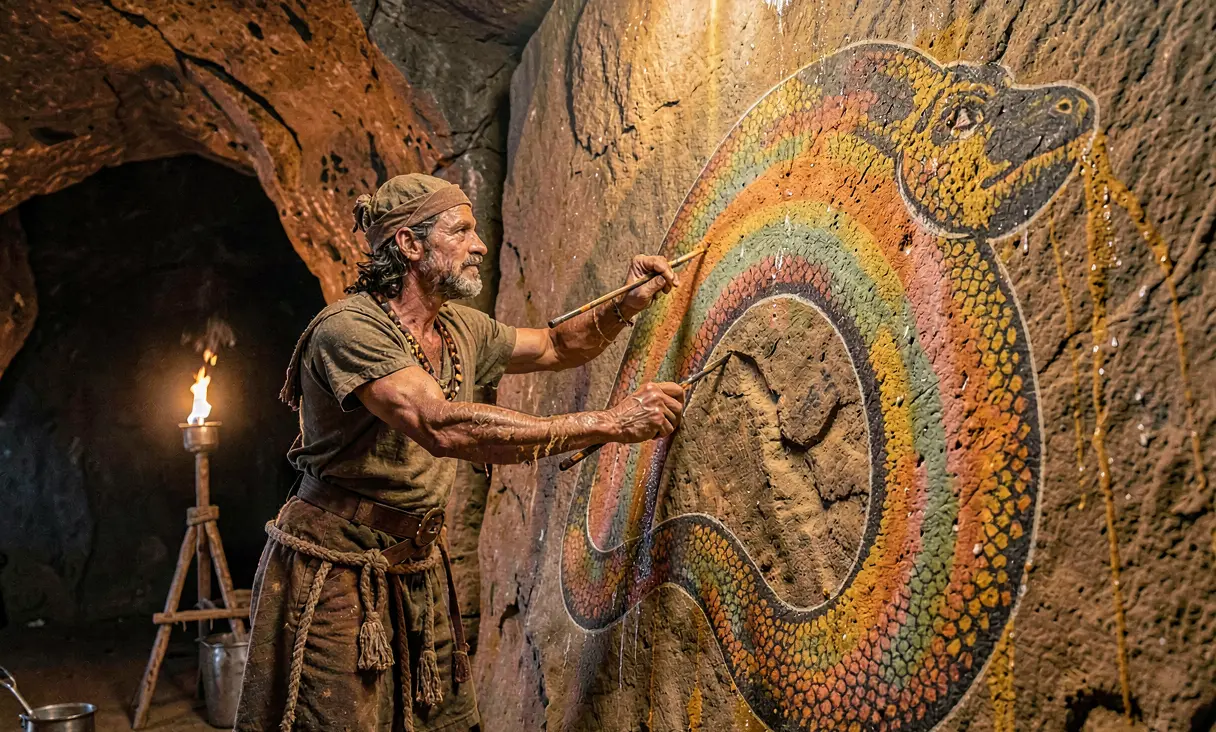 ArtPeak Period of Australian Aboriginal Rock Artc. 3000 BCE to 1500 CE · Kakadu National Park, AustraliaAboriginal artists create vast galleries of rock paintings depicting ancestral beings and hunting scenes.
 ArtCreation of the Benin Bronzes under Oba Ewuarec. 1450 CE · Benin City, NigeriaOba Ewuare commissions the famous bronze and ivory plaques documenting court life and military victories.
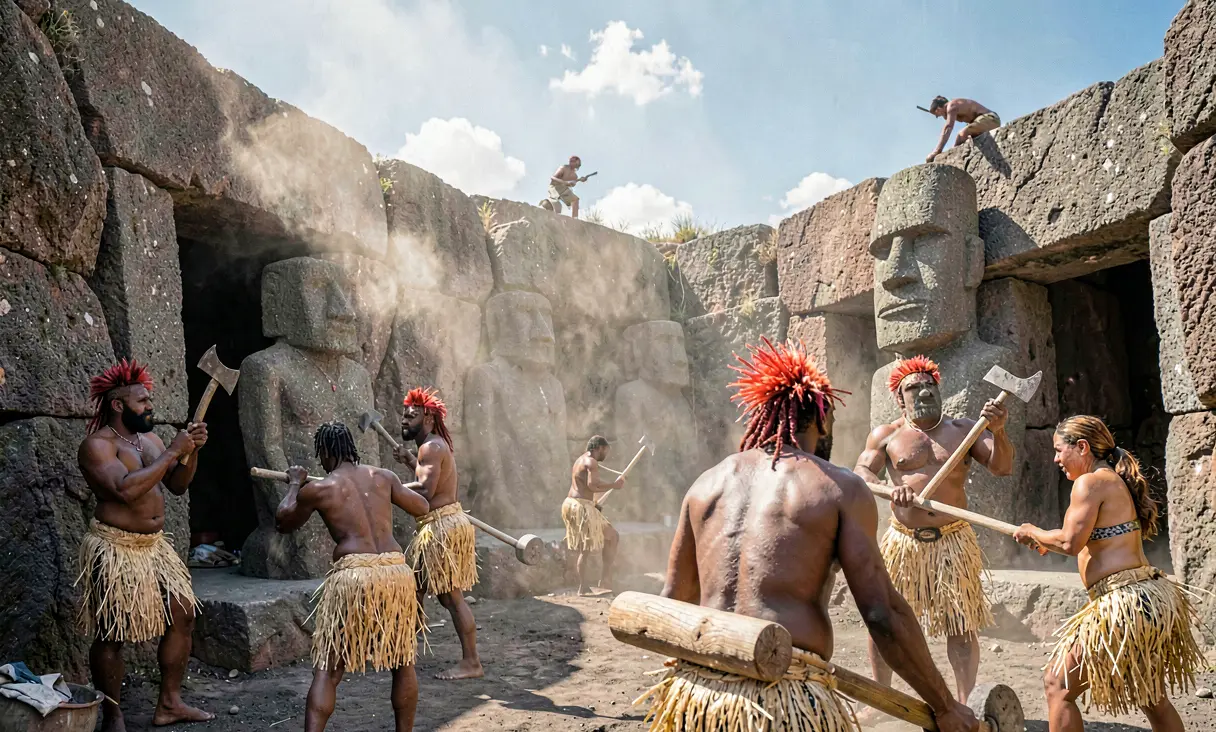 ArtMass Production of Moai Statues at Rano Rarakuc. 1400 CE · Rano Raraku Quarry, Rapa NuiThe peak period of moai carving begins at the Rano Raraku quarry under the direction of clan chiefs.
 ExplorationFoundation of Carthage by Phoenician Colonistsc. 814 BCE · Carthage (Tunis), TunisiaPhoenician settlers from Tyre establish the city of Carthage in North Africa.
 PoliticsJayavarman II Declares Independence from Java802 CE · Mount Kulen, CambodiaJayavarman II performs the Devaraja ceremony, founding the Khmer Empire and declaring independence.
 WarHuang Chao Rebellion and Fall of Tang874 CE · Shandong Province, ChinaHuang Chao leads a massive peasant uprising that sacks Chang'an and destroys Tang authority.
Discussion
Loading…