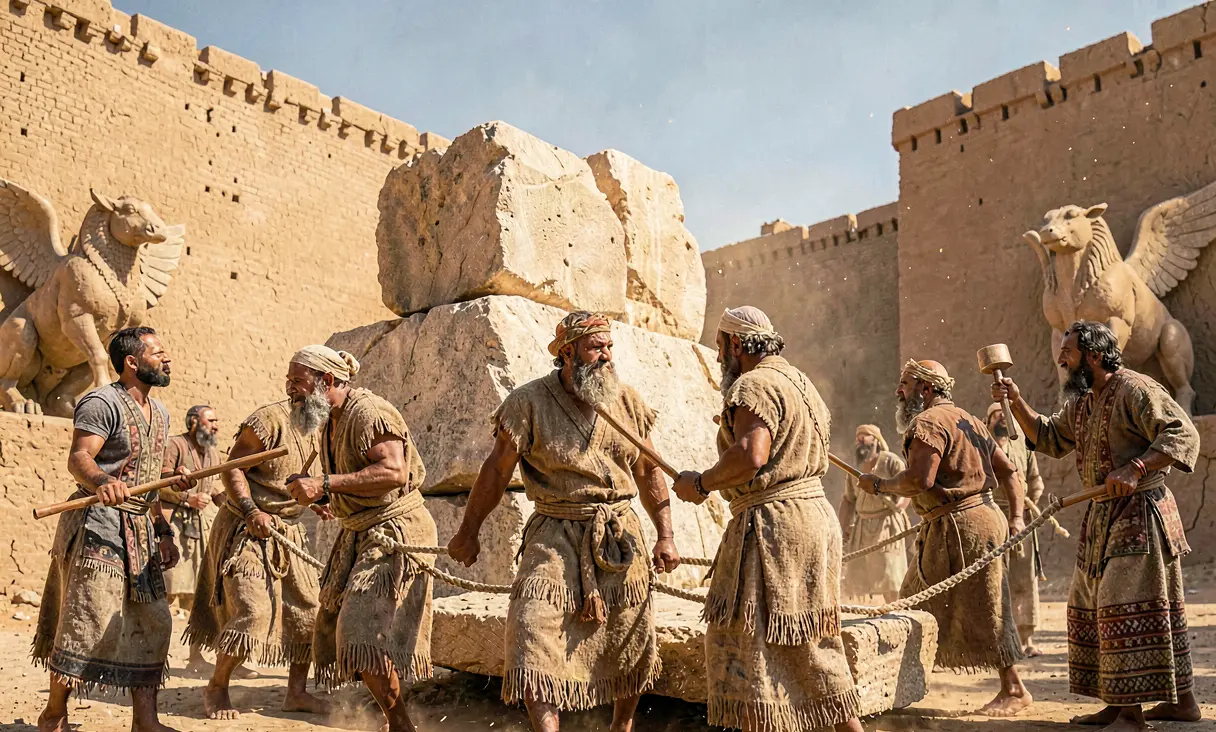
Construction of Sennacherib's Palace at Nineveh
Sennacherib transformed Nineveh into the ancient world's greatest city through massive fortifications, advanced aqueducts, and the 'Palace Without Rival,' creating a cultural hub that preserved Mesopo
The Ascendancy of Nineveh
By the late 8th century BCE, the Neo-Assyrian Empire stood as the dominant military and political force in the ancient Near East, yet its capital, Kalhu (Nimrud), had served for centuries. King Sennacherib, ascending the throne in 705 BCE following a tumultuous succession, sought to break from tradition and establish a new imperial center that would reflect his unparalleled ambition. He selected Nineveh, an ancient settlement on the eastern bank of the Tigris River, as the site for this monumental transformation. Unlike previous capitals which were often built upon existing foundations with incremental expansions, Sennacherib envisioned Nineveh as a total reconstruction, a 'Palace Without Rival' that would physically manifest the empire's invincibility and his own divine mandate.
Architectural Ambition and Hydraulic Engineering
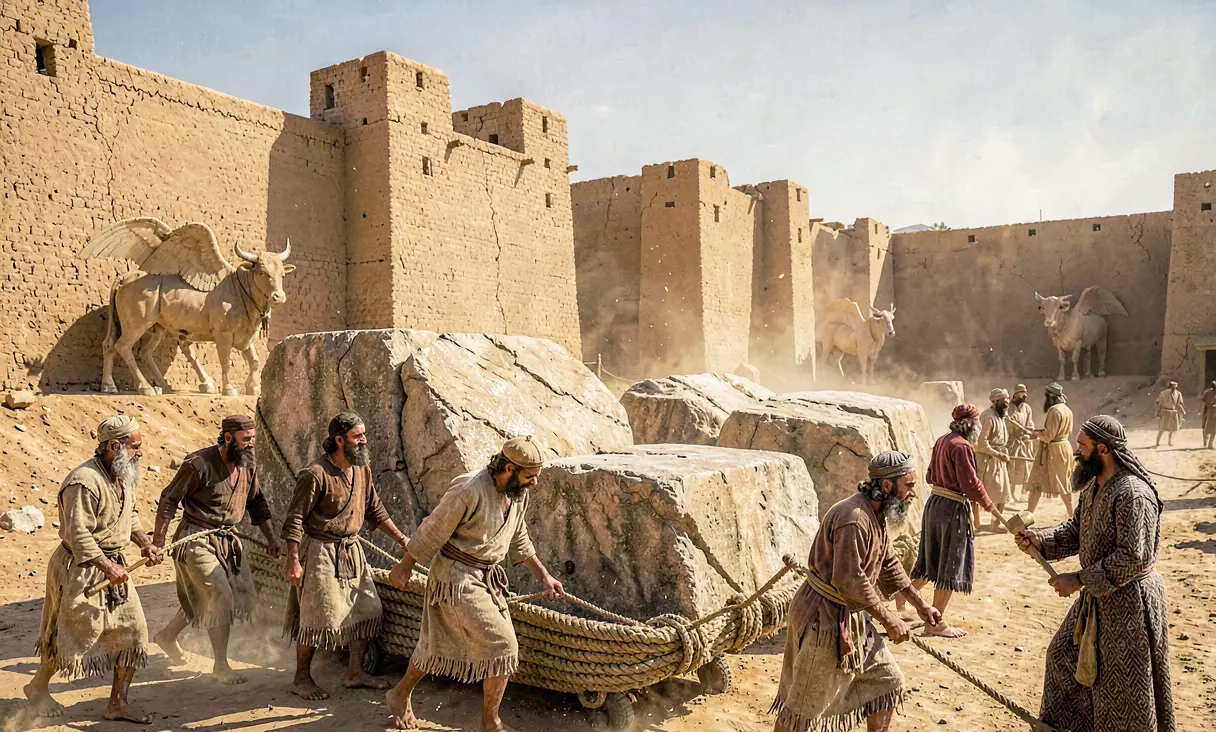
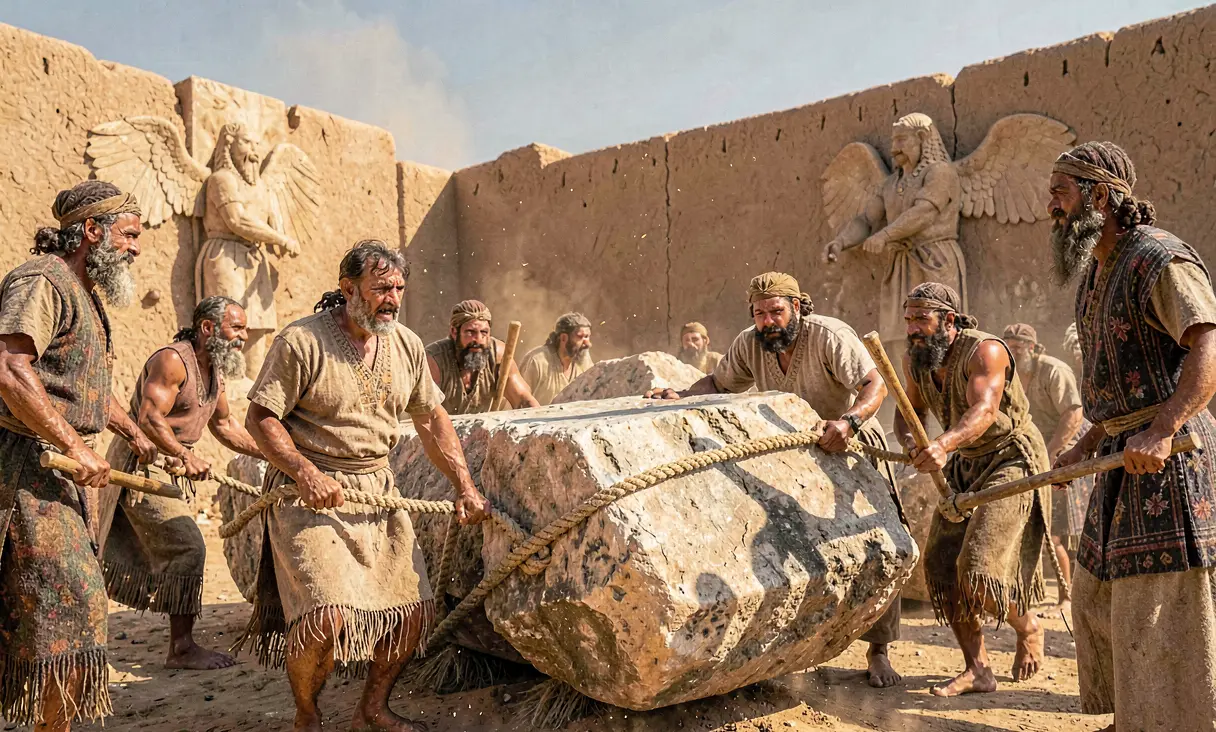
The construction project was unprecedented in scale, requiring the leveling of vast mounds and the erection of massive fortification walls that enclosed an area of over 700 hectares. Sennacherib's engineering prowess extended beyond architecture into complex hydraulic systems; to sustain this burgeoning metropolis, he commissioned the Jerwan Aqueduct around 703 BCE. This structure, spanning nearly a kilometer with six arches and built from massive limestone blocks, channeled water from the Gomel River in the Zagros Mountains to Nineveh's gardens and reservoirs. It remains one of the earliest known aqueducts in history, demonstrating a sophisticated understanding of gradient and flow control that would not be matched for centuries.
The Palace Without Rival
At the heart of the new city stood Sennacherib's 'Palace Without Rival,' situated on the Kuyunjik mound. The structure was a labyrinthine complex of courtyards, throne rooms, and administrative chambers, accessed through colossal winged bull lamassu statues guarding the entrances. Internally, the palace was adorned with over 3,000 feet of alabaster reliefs that served as a visual propaganda machine. These bas-reliefs depicted detailed scenes of Sennacherib's military campaigns against Judah and Babylon, the siege of Lachish, and his personal prowess in lion hunting. The artistry was not merely decorative but narrative, intended to communicate the king's absolute power and the favor of the gods to both subjects and foreign dignitaries.
Sennacherib: The Builder-King
Sennacherib (reigned 705–681 BCE) was a ruler defined by his dual identity as a ruthless conqueror and a visionary administrator. While historical records emphasize his brutal suppression of rebellions, his inscriptions reveal a deep personal investment in the arts and sciences. He famously boasted that he had 'multiplied the works' in Nineveh, transforming it from a minor town into a cosmopolitan hub. His reign marked a shift in Assyrian ideology where the king was portrayed not just as a warrior but as a cultivator of civilization, responsible for bringing order to nature through irrigation and urban planning. This self-fashioning was central to his legitimacy, distinguishing him from his predecessors who relied more heavily on military might alone.
The City as Cultural Nexus
Under Sennacherib's direction, Nineveh evolved into a cultural repository that would eventually house the Library of Ashurbanipal. While the library itself was compiled by his grandson, the foundation for this intellectual explosion was laid during Sennacherib's reign through the influx of scribes, artisans, and scholars drawn to the new capital. The city became a melting pot of cultures, absorbing knowledge from conquered territories in Egypt, Anatolia, and the Levant. The construction of the palace and its associated temples created a physical space where cuneiform texts were collected, copied, and studied, preserving myths like the Epic of Gilgamesh and vast administrative records that provide modern historians with an unparalleled window into antiquity.
Legacy and Historical Significance
The construction of Sennacherib's palace fundamentally altered the trajectory of Mesopotamian history, establishing Nineveh as the preeminent city of the ancient world until its destruction in 612 BCE. The artistic innovations of the Neo-Assyrian reliefs set a new standard for narrative art, influencing subsequent cultures across the Mediterranean and Near East. Furthermore, the hydraulic engineering feats at Jerwan stand as a testament to Assyrian technological superiority. Although the city was eventually razed by a coalition of Medes and Babylonians, the archaeological recovery of Sennacherib's palace in the 19th century revolutionized the understanding of biblical history and ancient Near Eastern civilization, revealing a sophistication that had been lost for millennia.
Sennacherib's construction projects elevated Nineveh to the status of the premier Assyrian capital and center of culture.
Where it happened
Nineveh (Mosul), Iraq — see it on the interactive map →
Explore related history
 ArtRise of Black-Figure Vase Paintingc. 700 BCE · Athens, GreeceGreek potters perfect the black-figure technique to depict mythological scenes.
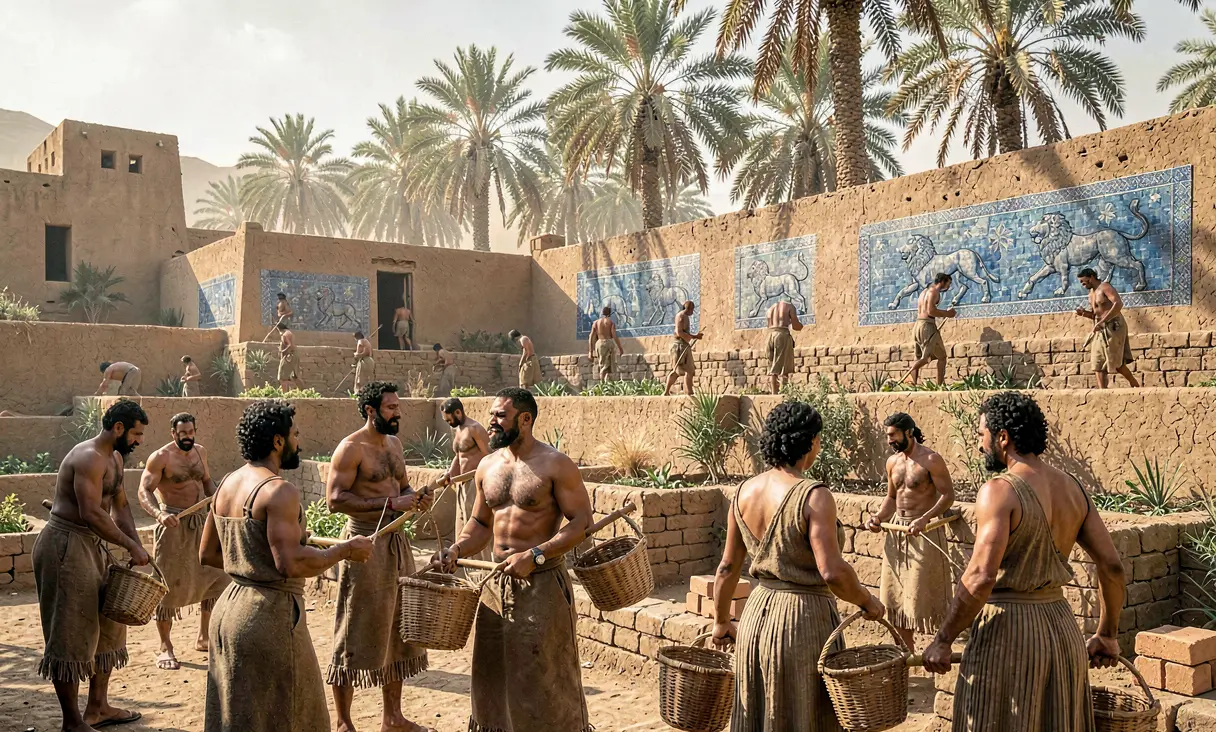 ArtConstruction of the Hanging Gardens of Babylonc. 605 BCE · Babylon, Mesopotamia (Iraq)Nebuchadnezzar II builds the legendary Hanging Gardens for his Median wife.
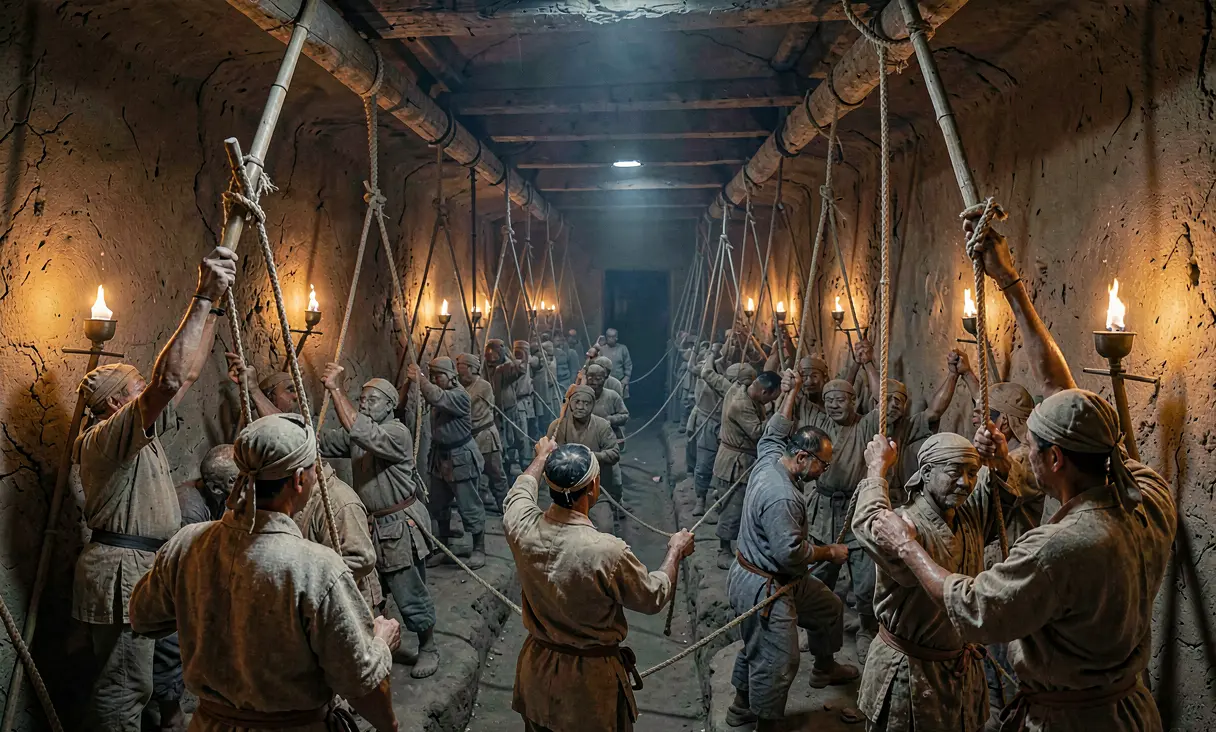 ArtBurial of Qin Shi Huang's Terracotta Armyc. 210 BCE · Xi'an, ChinaEmperor Qin Shi Huang is buried with a massive army of life-sized terracotta soldiers to guard him in the afterlife.
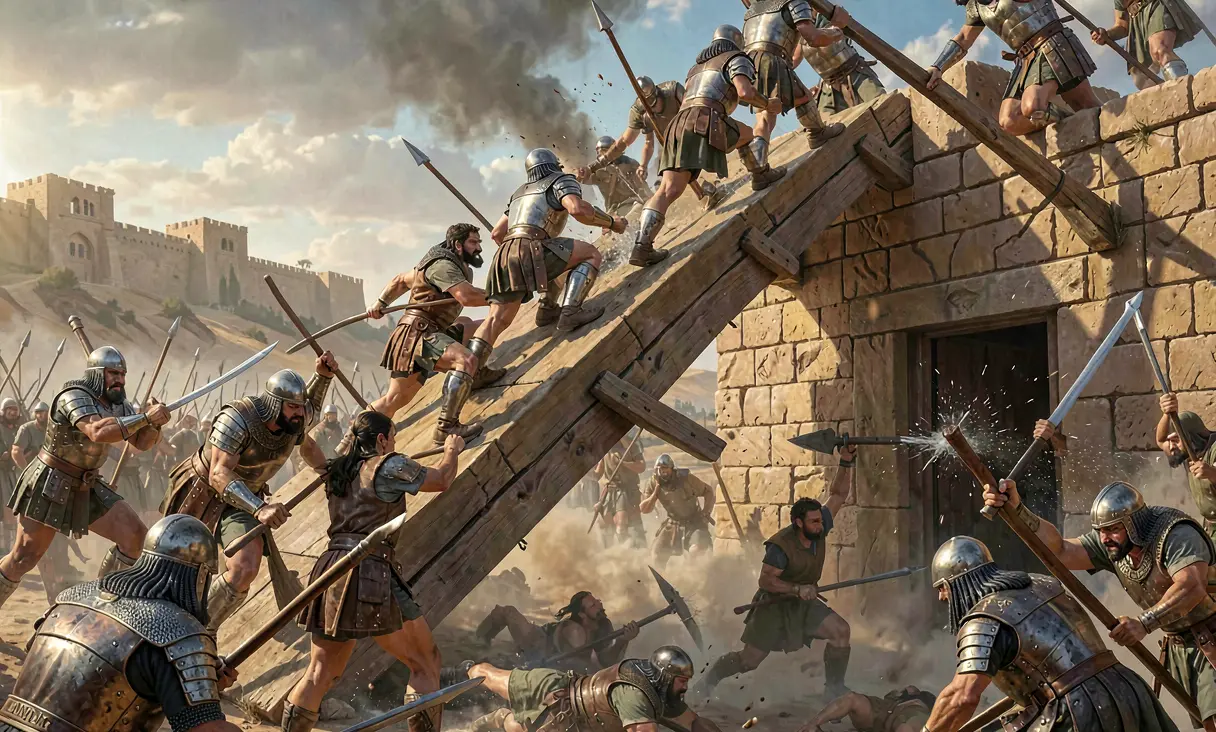 WarAssyrian Siege and Sack of Lachishc. 701 BCE · Lachish (Tell ed-Duweir), IsraelSennacherib's Assyrian army brutally conquers the fortified Judean city of Lachish.
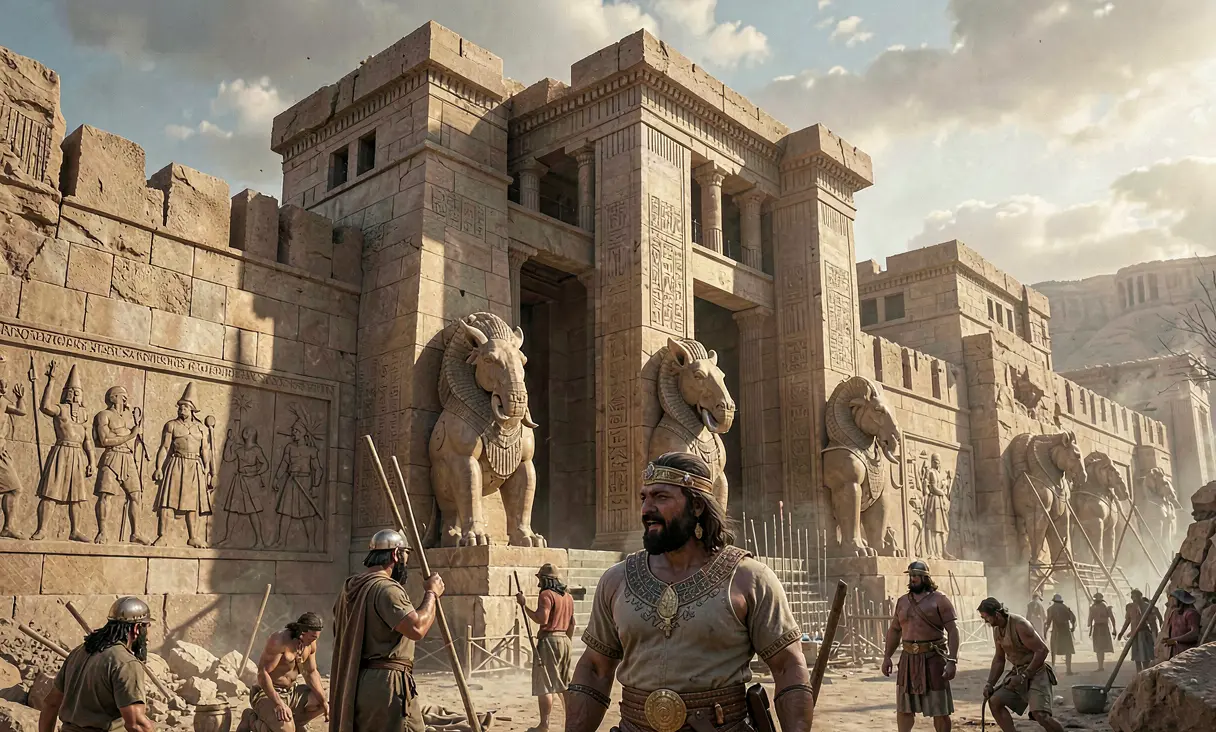 PoliticsFounding of Dur-Sharrukin by Sargon IIc. 717 BCE · Khorsabad (Dur-Sharrukin), IraqSargon II builds a new capital city to project Assyrian power and administrative control.
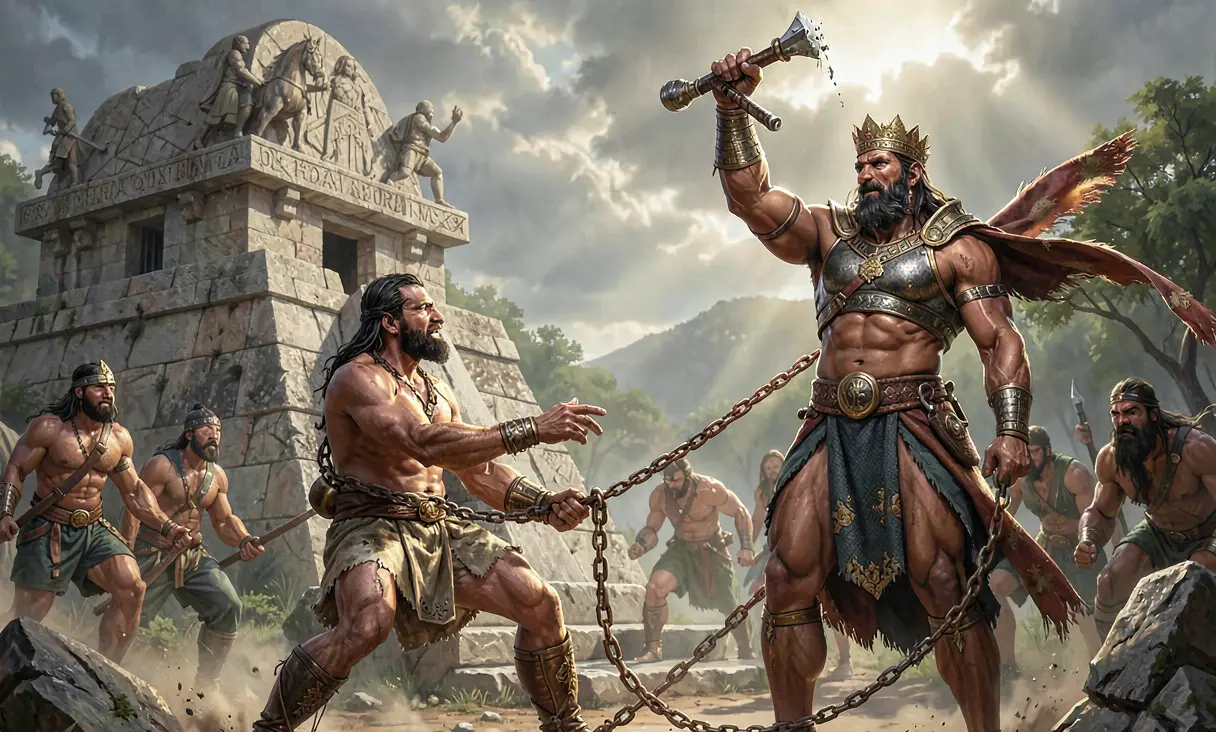 WarDeath of Ah Cacao and Fall of Copán's Dynasty738 CE · Copán, HondurasThe king of Copán is captured and executed by his rival from Quiriguá, ending a golden age.
Discussion
Loading…