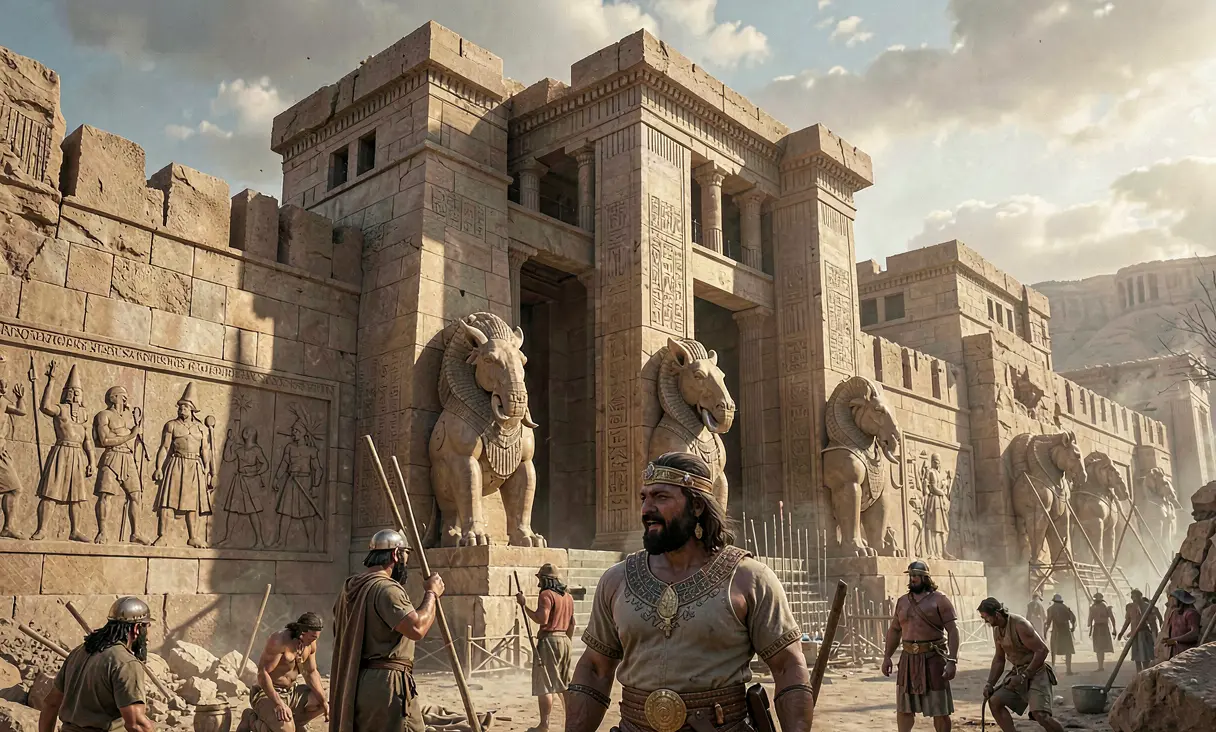
Founding of Dur-Sharrukin by Sargon II
Sargon II's brief capital at Dur-Sharrukin stands as the most complete example of Neo-Assyrian urban planning, frozen in time by his sudden death and serving as an enduring monument to imperial ambiti
Rise of a New Dynasty
Following the death of Tiglath-Pileser III and the brief reign of Shalmaneser V, Sargon II seized the Assyrian throne in 722 BCE amidst political instability and external threats. Unlike his predecessors who ruled from established capitals like Nimrud or Nineveh, Sargon sought to legitimize his usurped authority through a grand architectural statement. He required a fresh start, a city built entirely under his supervision that would embody the divine mandate of Ashur and the absolute power of the new dynasty. This ambition marked a pivotal shift in Neo-Assyrian imperial strategy, moving beyond mere military conquest toward comprehensive urban planning as a tool of statecraft.
The Conception of Dur-Sharrukin
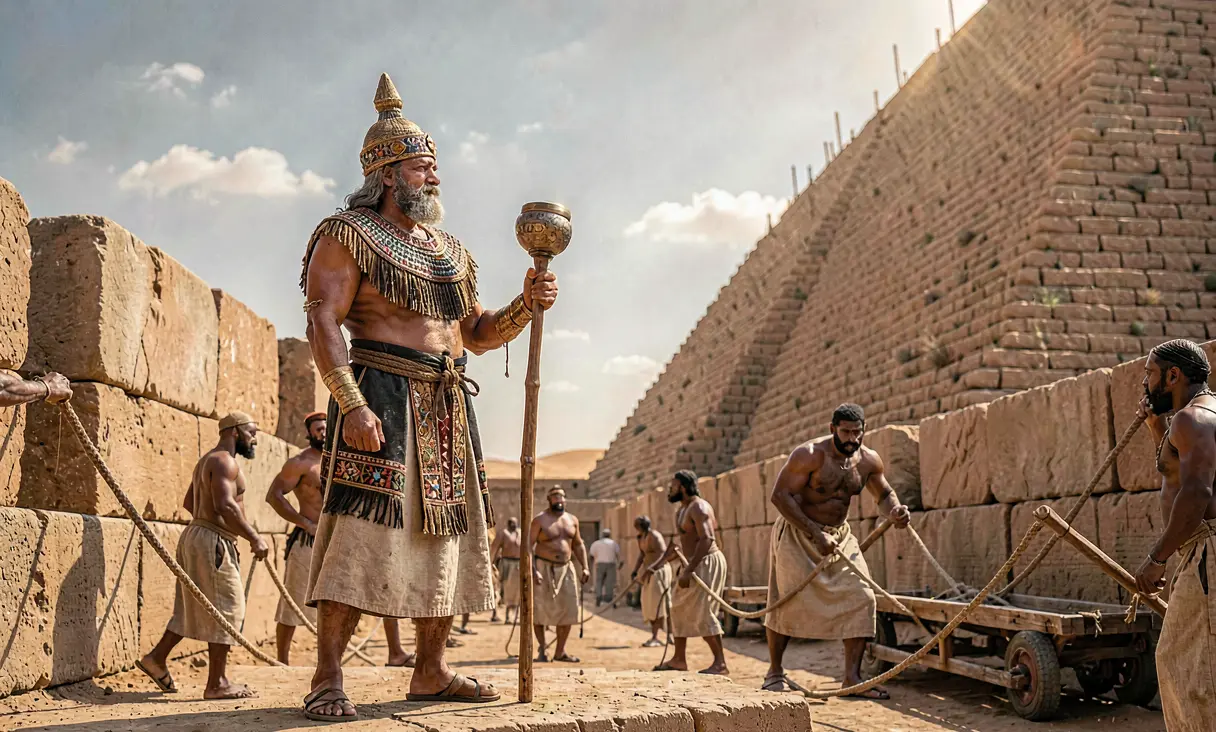
Construction began around 717 BCE on a vast plain approximately 15 kilometers northeast of Nineveh, near the modern village of Khorsabad. The site was chosen for its strategic proximity to the Tigris River and existing trade routes, yet it remained a blank slate free from previous dynastic associations. Sargon named the city Dur-Sharrukin, meaning 'Fortress of Sargon,' explicitly linking his identity to the state itself. The project mobilized laborers and artisans from across the empire, including deported populations from conquered territories in Israel, Elam, and Urartu, transforming them into a workforce that physically built their own subjugation.
Architectural Grandeur and Urban Design
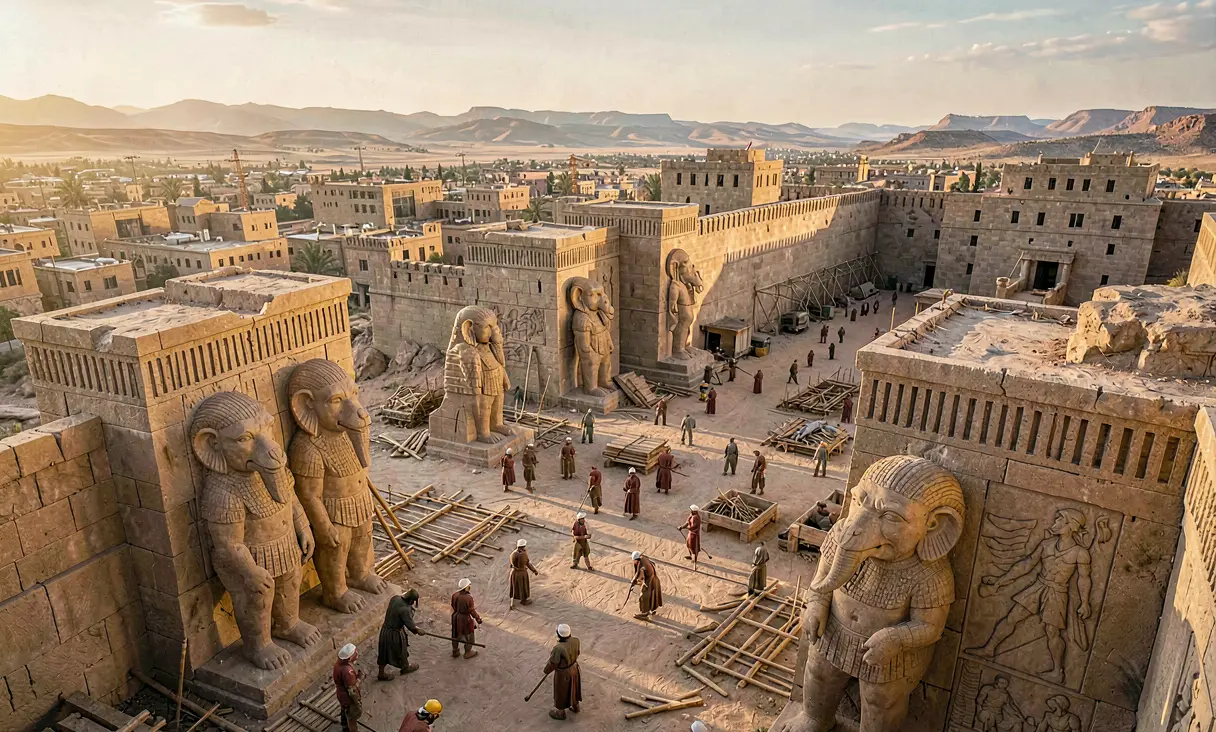
Dur-Sharrukin was designed as a perfect square, enclosed by massive mudbrick walls reinforced with 158 towers and flanked by seven monumental gates. The city covered approximately 300 hectares, featuring a distinct citadel that housed the royal palace, temples dedicated to major deities like Nabu and Sin, and administrative complexes. The Palace of Sargon was the crown jewel, adorned with colossal lamassu—winged bulls with human heads weighing up to 40 tons each—which guarded the entrances. Interior walls were covered in alabaster reliefs depicting the king's military victories, such as the siege of Samaria, and his prowess in lion hunting, serving as a visual propaganda machine for both domestic and foreign dignitaries.
The Final Years and Sudden Demise
Despite the city's rapid construction over roughly a decade, it was never fully completed or inhabited by the king for long. In 705 BCE, while leading a campaign against the Cimmerians in Tabal (modern-day central Turkey), Sargon II was killed in battle, and his body was reportedly lost to the enemy—a catastrophic blow to Assyrian morale. His son and successor, Sennacherib, viewed Dur-Sharrukin as tainted by this ill omen. Refusing to reside in a city where his father had met such a dishonorable end, Sennacherib abandoned Dur-Sharrukin almost immediately upon ascending the throne.
Abandonment and Rediscovery
The capital was swiftly relocated back to Nineveh, which Sennacherib expanded into an even greater metropolis. Dur-Sharrukin fell into rapid disuse; its unfinished structures were left exposed to the elements, and its population dispersed. For centuries, the site lay buried beneath the sands of Iraq, known only through cuneiform tablets that mentioned the 'Fortress of Sargon.' It was not until 1843, when French archaeologist Paul-Émile Botta began excavations at Khorsabad, that the city's true scale and splendor were revealed to the modern world, providing the first comprehensive understanding of Assyrian palace architecture.
Legacy of Imperial Ambition
Although Dur-Sharrukin served as a capital for less than ten years, its historical significance is profound. It stands as the most complete example of Neo-Assyrian urban planning, offering archaeologists an unparalleled window into the administrative, religious, and artistic life of the empire at its zenith. The site's preservation allows historians to trace the precise layout of Assyrian bureaucracy and the iconography used to project imperial power. Today, the ruins of Khorsabad remain a testament to Sargon II's fleeting but monumental vision, illustrating how architecture was wielded as a primary instrument of political legitimacy in the ancient Near East.
Dur-Sharrukin stands as a monumental achievement of Assyrian architecture and urban planning, showcasing imperial grandeur.
Where it happened
Khorsabad (Dur-Sharrukin), Iraq — see it on the interactive map →
Explore related history
 PoliticsReign of Emperor Taizong and the Zhenguan Era626 CE · Chang'an, ChinaLi Shimin ascends the throne after the Xuanwu Gate Incident, ushering in a golden age of governance.
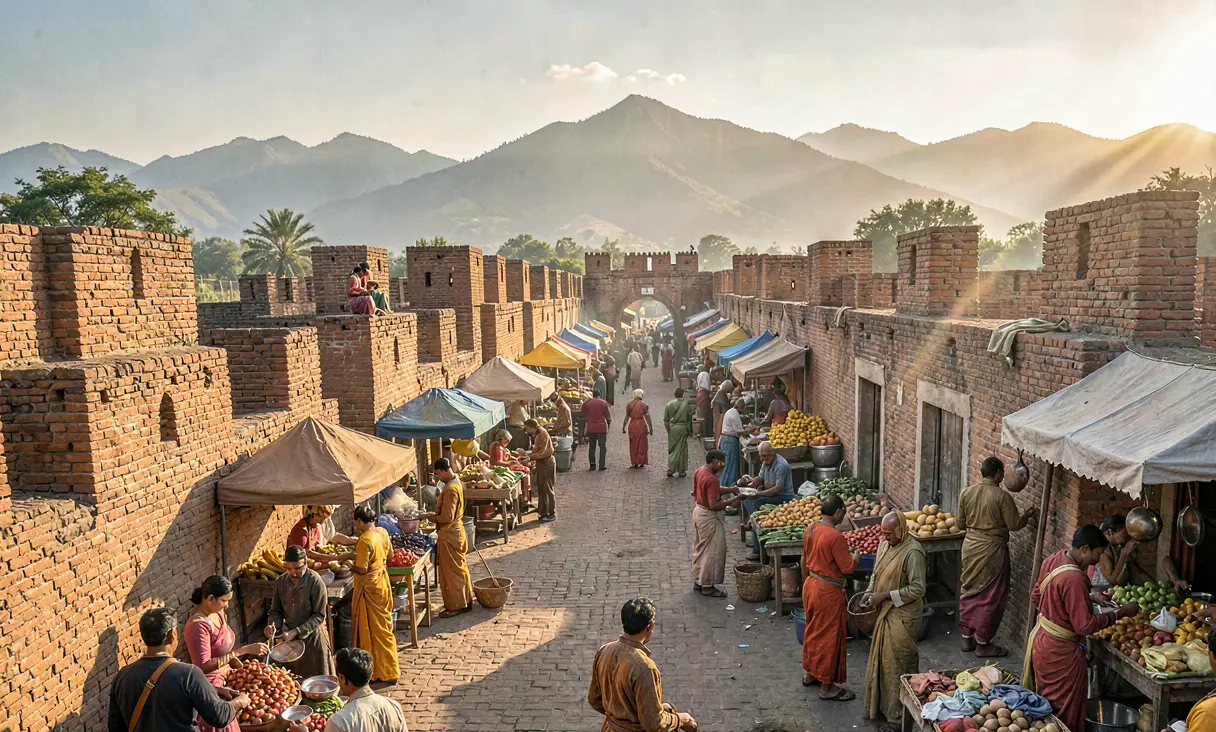 PoliticsRise of the Sixteen Mahajanapadasc. 600 BCE · Gangetic Plain (modern Uttar Pradesh/India)Sixteen great kingdoms and republics emerge across the Gangetic plain, marking the transition from tribal chiefdoms to state-level societies.
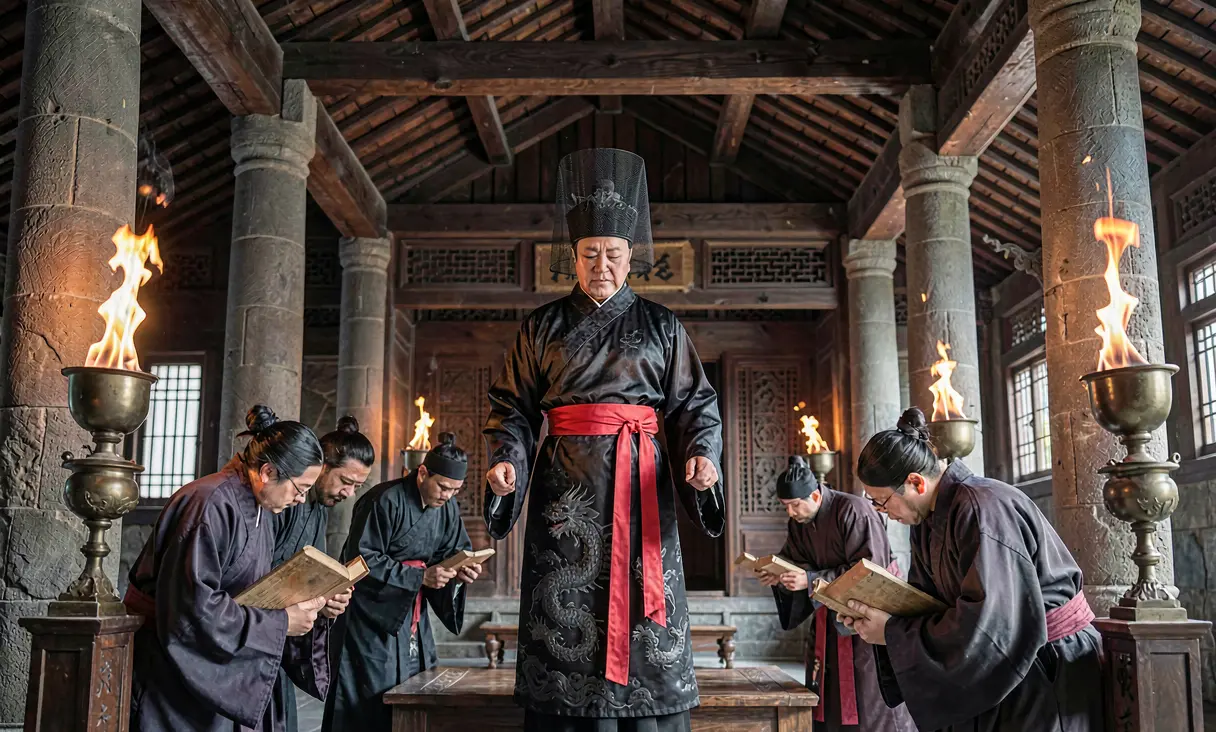 PoliticsEmperor Wen Unifies China and Founding of Sui Dynasty581 CE · Chang'an, ChinaYang Jian usurps the Northern Zhou throne, ending centuries of division and establishing the Sui Dynasty.
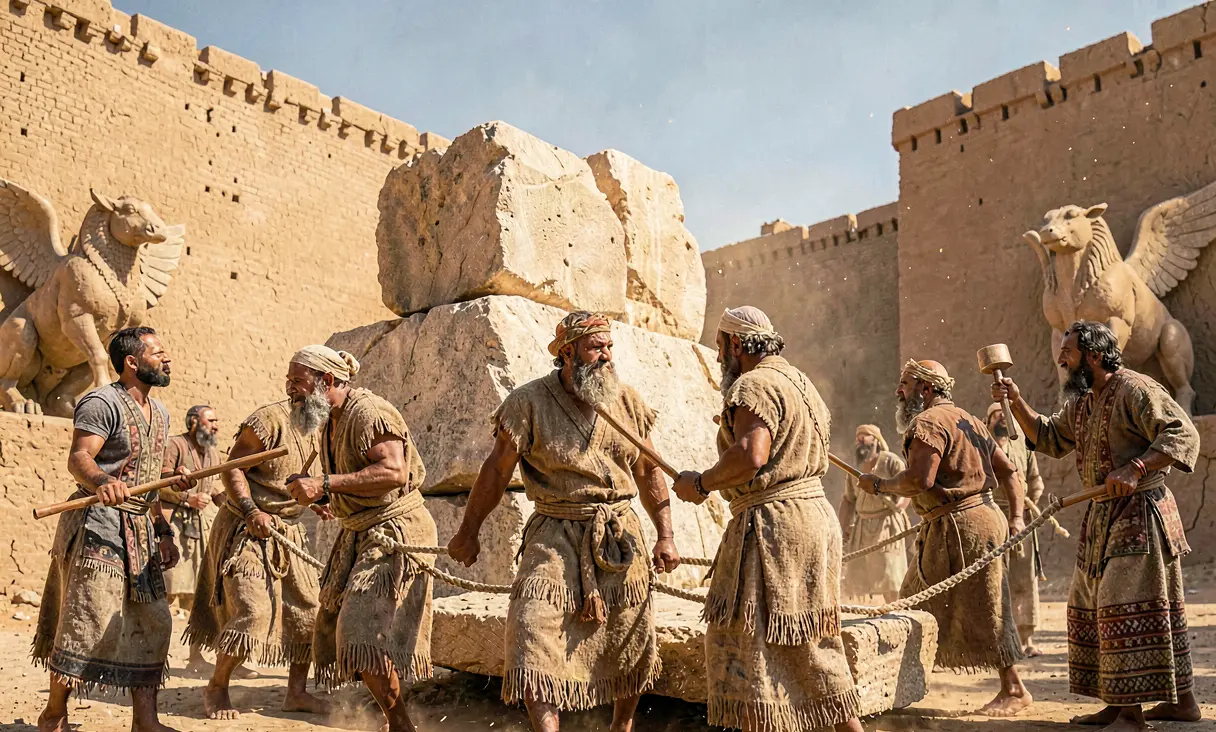 ArtConstruction of Sennacherib's Palace at Ninevehc. 705 BCE · Nineveh (Mosul), IraqSennacherib expands Nineveh into a magnificent capital filled with art and libraries.
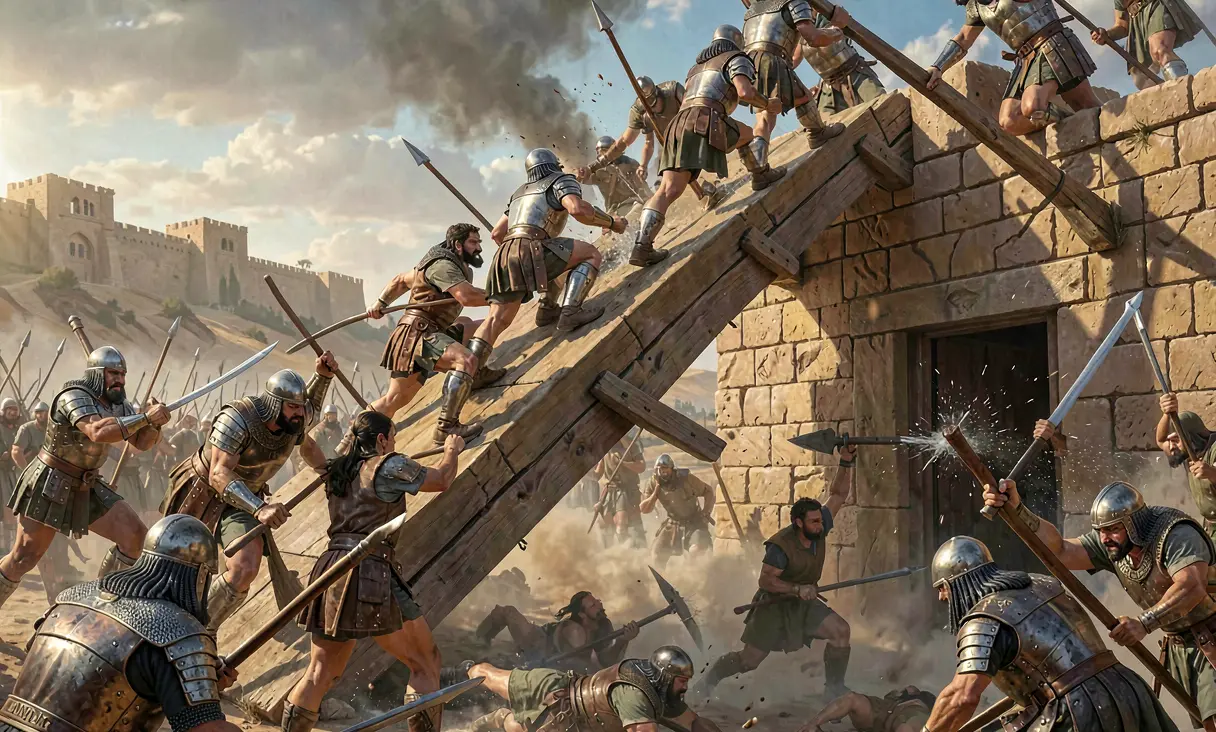 WarAssyrian Siege and Sack of Lachishc. 701 BCE · Lachish (Tell ed-Duweir), IsraelSennacherib's Assyrian army brutally conquers the fortified Judean city of Lachish.
 ArtRise of Black-Figure Vase Paintingc. 700 BCE · Athens, GreeceGreek potters perfect the black-figure technique to depict mythological scenes.
Discussion
Loading…