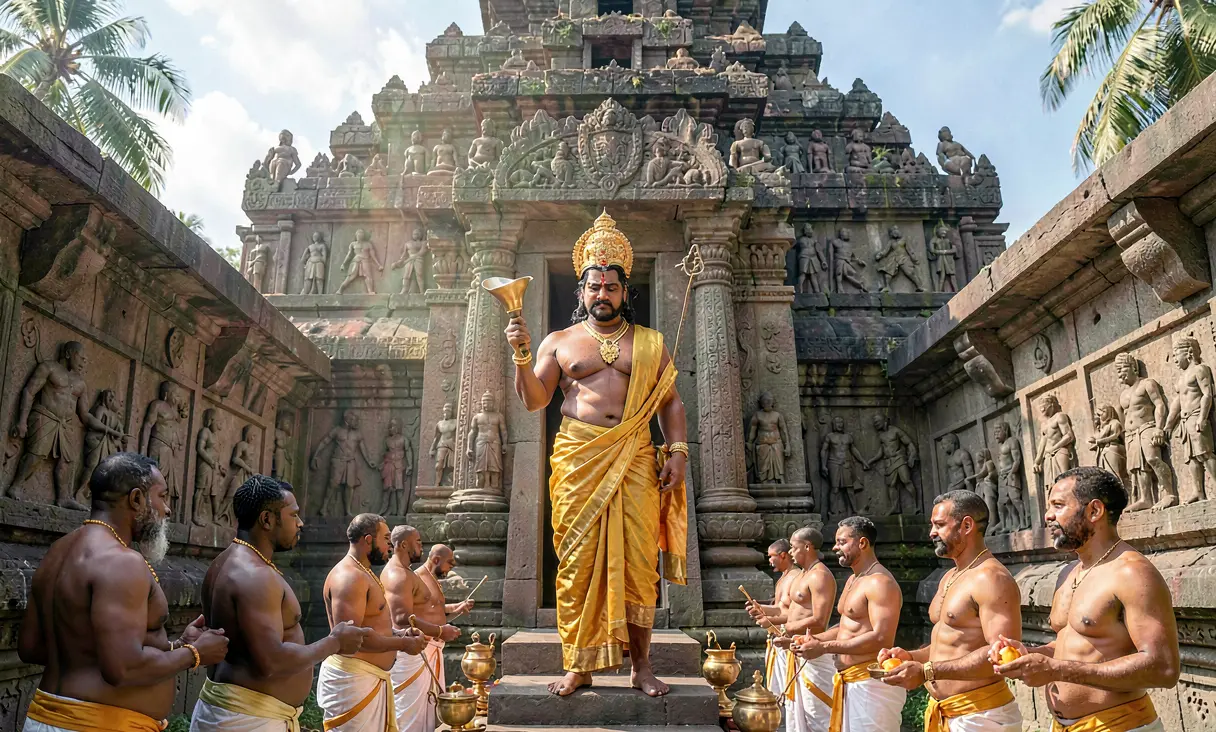
Consecration of Angkor Wat
Consecrated to Vishnu around 1150 CE by King Suryavarman II, Angkor Wat remains the world's largest religious monument and a timeless symbol of Cambodia's architectural genius.
The Zenith of the Khmer Empire
By the early 12th century, the Khmer Empire under King Suryavarman II had reached its territorial and cultural apex. Following decades of internal strife and external threats, Suryavarman II ascended the throne around 1113 CE, consolidating power through military conquests that extended Khmer influence from the Chao Phraya valley in the west to the Mekong delta in the east. Unlike his predecessors who often adhered to Shaivism or Buddhism, Suryavarman II championed Vaishnavism, a theological shift that would fundamentally reshape the spiritual and architectural landscape of Southeast Asia. The dedication of Angkor Wat around 1150 CE was not merely a religious ceremony but a political manifesto, asserting the king's divine right to rule as an incarnation of Vishnu on earth.
A Microcosm of the Cosmos
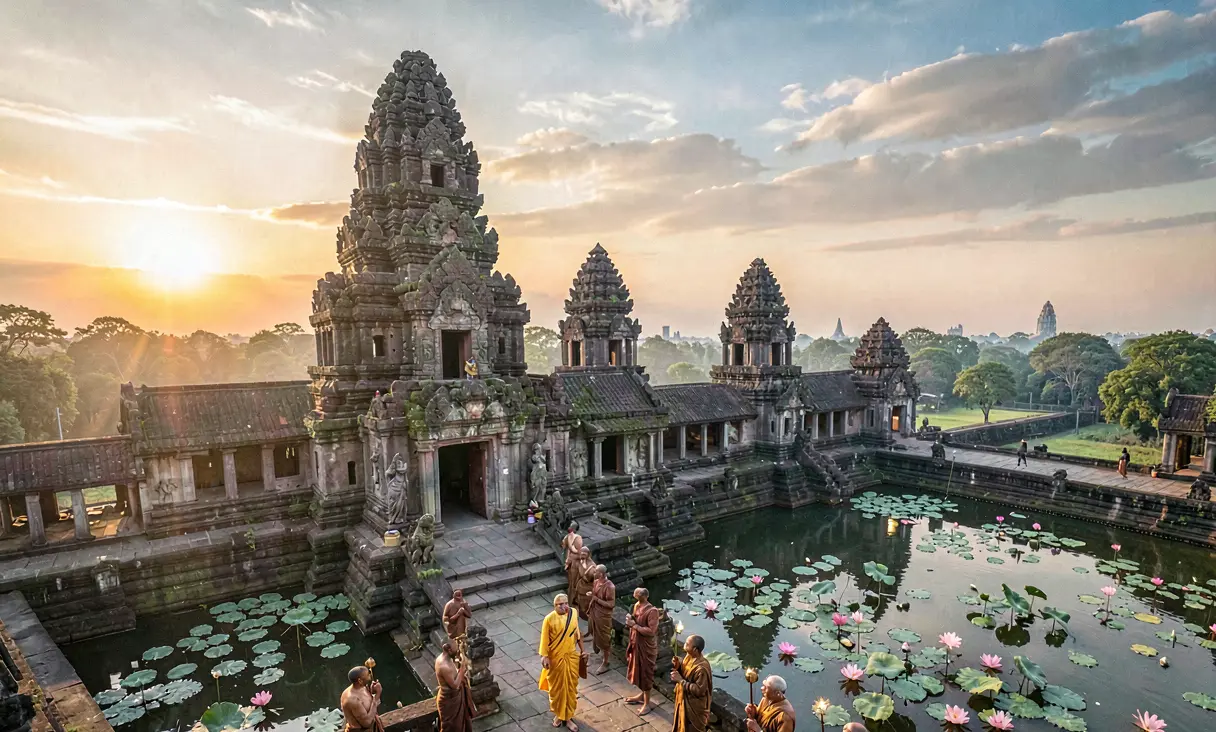
The consecration marked the completion of a structure designed with profound cosmological precision. Angkor Wat was conceived not simply as a temple, but as a stone representation of Mount Meru, the five-peaked home of the gods in Hindu mythology. The central tower, rising 65 meters above the ground, symbolizes the summit of Meru, while the four surrounding towers represent its lesser peaks. Encircled by a massive moat over 190 meters wide and a 3.6-kilometer long outer wall, the complex mimics the cosmic ocean and mountain ranges that surround the world in Hindu cosmology. The orientation to the west, unusual for Khmer temples which typically face east toward the rising sun, is widely believed to be linked to its function as a funerary temple or its specific dedication to Vishnu, who is associated with the setting sun.
The Theological Dedication
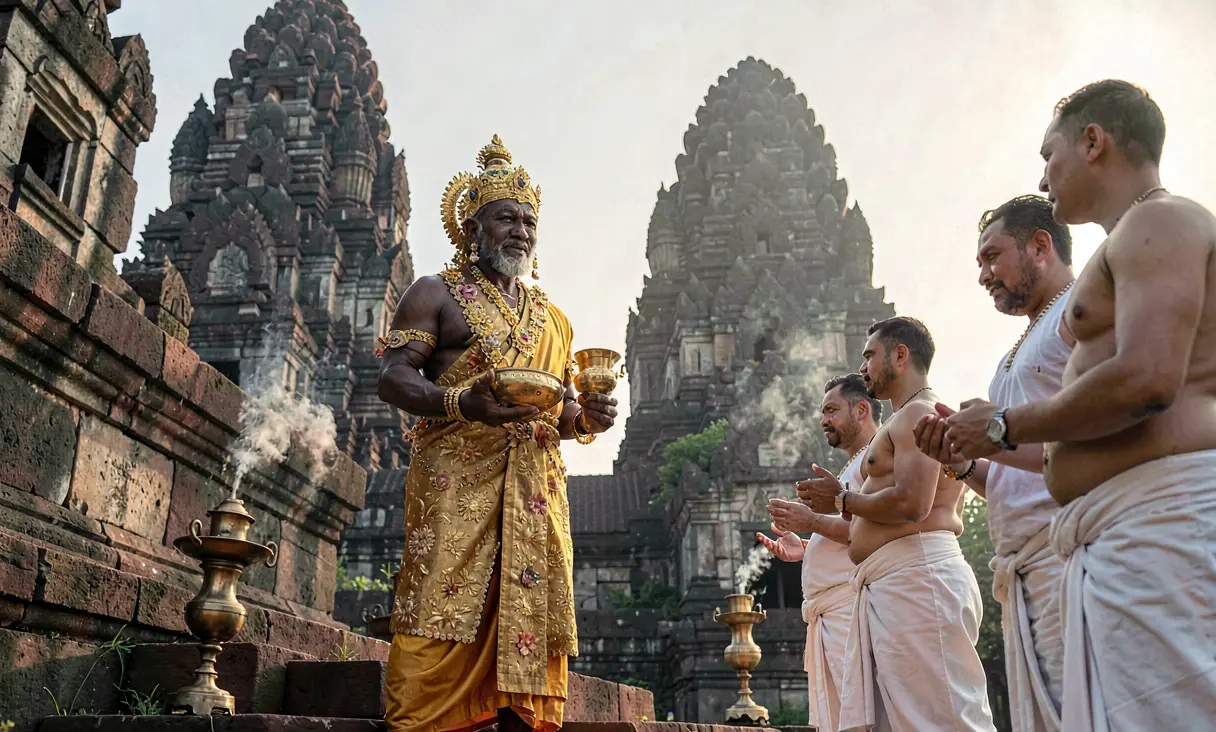
Around 1150 CE, following years of construction that likely began in the first decade of Suryavarman's reign, a grand consecration ceremony was held to formally dedicate the monument. While specific liturgical details from the event itself are lost to time due to the lack of surviving contemporary chronicles, epigraphic evidence and architectural inscriptions confirm the temple was originally named 'Vrah Vishnulok' or 'Parama Vishnuloka,' meaning 'The Abode of Vishnu.' The ceremony would have involved Vedic priests performing elaborate rituals to invoke the deity into the central sanctuary, transforming the stone structure from a mere edifice into a living divine presence. This act solidified the concept of Devaraja, or God-King, where the monarch and the deity were inextricably linked, with the temple serving as the king's earthly palace and the god's celestial abode.
Narratives in Stone
The consecration also unveiled the temple's most striking artistic feature: its extensive bas-reliefs that line the inner walls of the outer gallery. These carvings, totaling nearly 1,200 meters in length, served as a visual scripture for the populace and a testament to the king's piety and power. The galleries depict scenes from Hindu epics such as the Churning of the Ocean of Milk, the Battle of Kurukshetra from the Mahabharata, and the Ramayana. Uniquely, one gallery is dedicated to Suryavarman II himself, depicting his military processions and court life, effectively merging historical record with divine myth. These reliefs were not merely decorative; they were integral to the temple's function as a center of worship, providing devotees with a narrative journey through cosmic history and royal legitimacy.
Transition from Hinduism to Buddhism
The religious identity of Angkor Wat was not static. Following the death of Suryavarman II around 1150 CE, the empire faced invasions by the Chams and internal dynastic struggles. By the late 12th century, King Jayavarman VII, a devout Mahayana Buddhist, rose to power and shifted the state religion, constructing nearby Angkor Thom and the Bayon temple. However, unlike other Hindu temples that were abandoned or destroyed during this shift, Angkor Wat was gradually converted to Theravada Buddhism, which became the dominant faith in Cambodia by the 13th century. Monks moved into the complex, adapting the existing iconography; statues of Vishnu were replaced with Buddha images, and the bas-reliefs were reinterpreted through a Buddhist lens without erasing their original Hindu narratives.
An Enduring Legacy
Today, Angkor Wat stands as the largest religious monument in the world by land area, covering over 162 hectares. Its survival through centuries of political upheaval, jungle encroachment, and modern conflict is a testament to its structural integrity and cultural resilience. The temple remains an active site of worship for Cambodian Buddhists while simultaneously serving as the nation's most potent symbol, appearing on the national flag. Architecturally, it represents the pinnacle of Khmer engineering, utilizing sandstone blocks fitted together without mortar with such precision that not even a knife blade can fit between them. The consecration of 1150 CE initiated a legacy that transcends its original religious purpose, embodying the artistic and spiritual zenith of the Khmer civilization.
Angkor Wat's consecration represents the peak of Khmer imperial power and Hindu-Buddhist syncretism in Southeast Asia, remaining an enduring cultural icon.
Where it happened
Angkor Wat, Cambodia — see it on the interactive map →
Explore related history
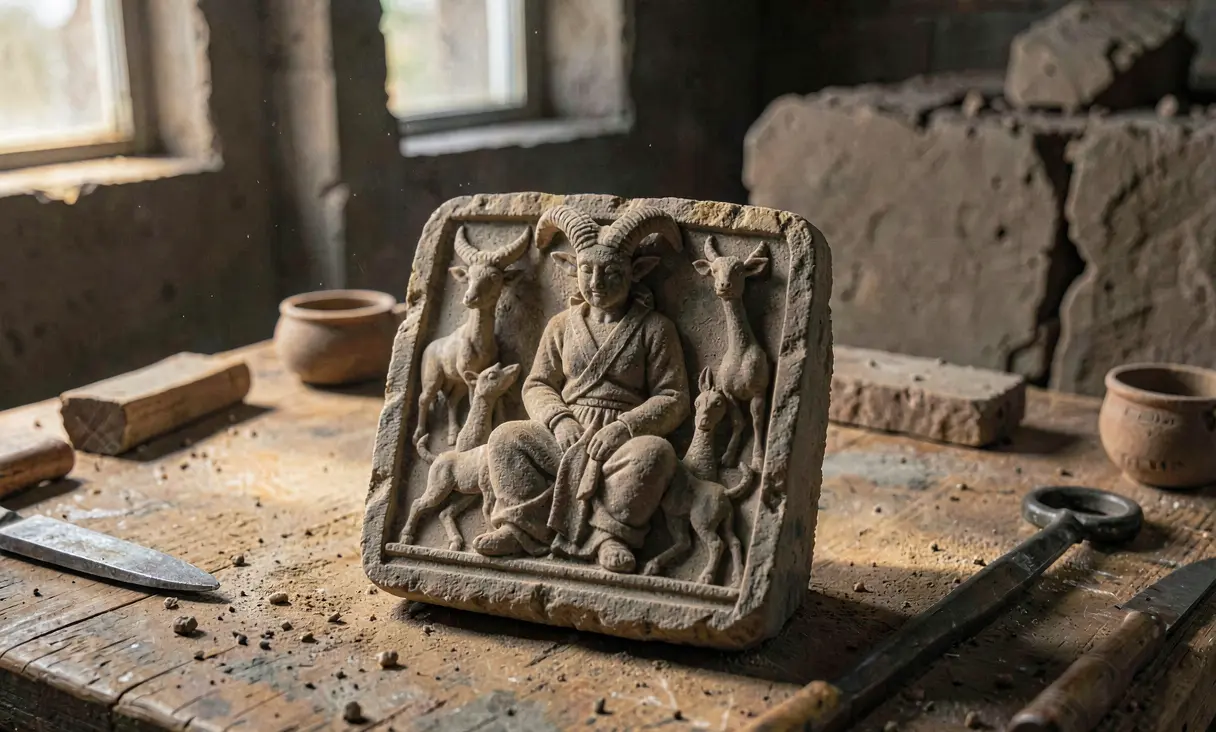 ReligionDiscovery of the Pashupati Sealc. 2500 BCE · Mohenjo-daro, Indus Valley (modern Pakistan)The Pashupati seal is carved, depicting a seated figure surrounded by animals, likely an early prototype of the Hindu god Shiva.
 ReligionRise of the Birdman Cult on Rapa Nuic. 1600 CE · Orongo, Rapa NuiThe Birdman cult replaces moai worship as the central religious and political institution on Rapa Nui.
 ReligionAskia Muhammad's Pilgrimage to Meccac. 1497 CE · Mecca (via Gao)Askia Muhammad undertakes a lavish pilgrimage to Mecca, strengthening ties with the Islamic world.
 WarJingkang Incident and Fall of Northern Song1127 CE · Kaifeng, ChinaJurchen Jin forces capture the Song capital, abducting emperors and forcing the dynasty south.
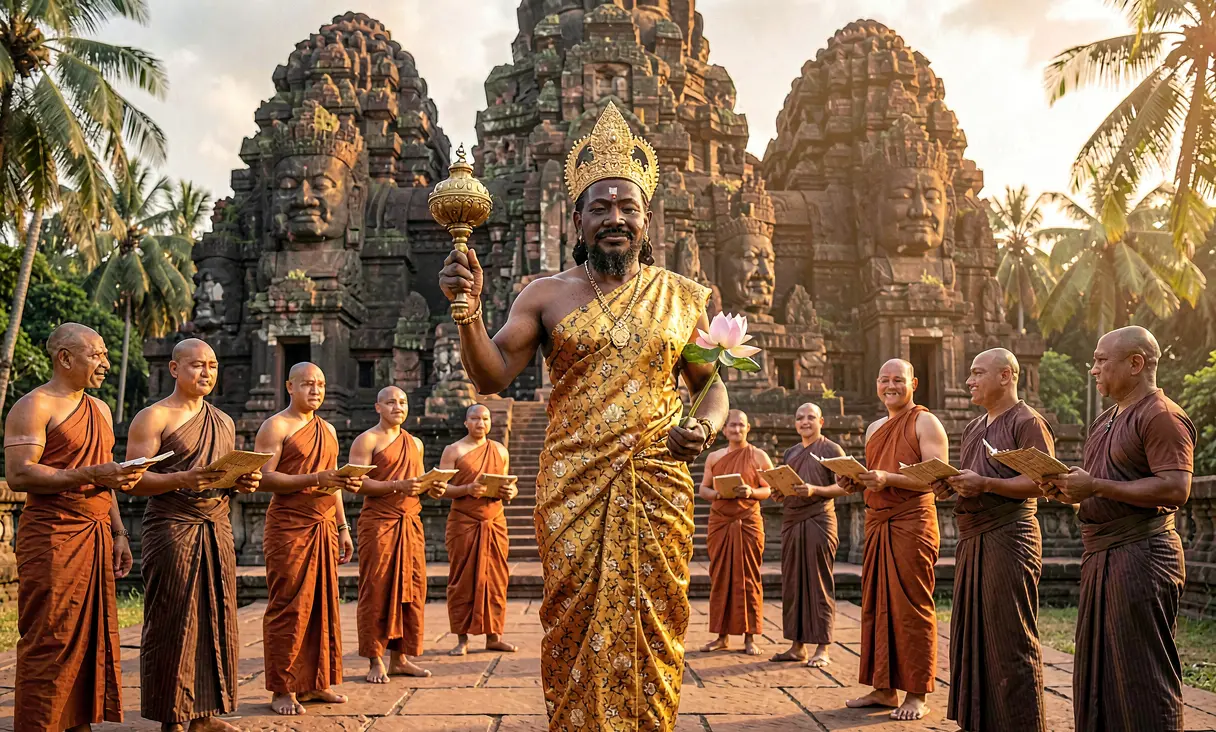 ReligionJayavarman VII Adopts Mahayana Buddhismc. 1180 CE · Angkor Thom, CambodiaKing Jayavarman VII converts to Mahayana Buddhism and builds the Bayon temple complex.
 ReligionZoroaster Preaches Dualistic Monotheismc. 1200 BCE · Greater Khorasan, Iran/Afghanistan border regionThe prophet Zoroaster establishes a dualistic faith emphasizing the cosmic struggle between good and evil in ancient Persia.
Discussion
Loading…