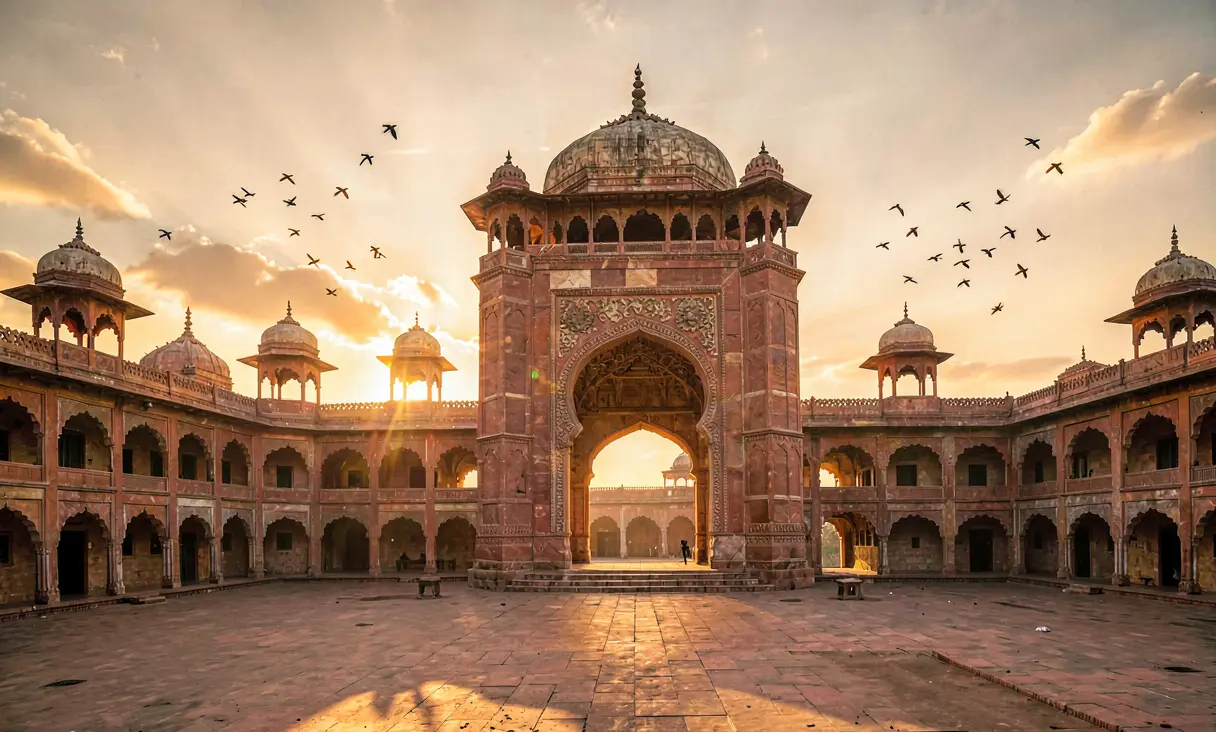
Founding of Fatehpur Sikri
Founded by Emperor Akbar in 1571 as a spiritual tribute and imperial capital, Fatehpur Sikri became a masterpiece of Mughal architecture before being abandoned within fourteen years due to water scarc
Imperial Ambition and Spiritual Devotion
In the mid-16th century, the Mughal Empire under Emperor Akbar was rapidly consolidating its dominance over the Indian subcontinent. By 1569, following a decisive military campaign in Gujarat that secured the empire's western flank, Akbar sought to commemorate both his victory and a profound personal blessing. The emperor had long been childless, causing significant anxiety regarding the succession of the throne. He turned to Shaikh Salim Chishti, a revered Sufi saint living in a humble dwelling near Sikri village, seeking spiritual intercession for an heir. The saint prophesied that Akbar would be blessed with three sons who would survive into adulthood. When this prophecy was fulfilled with the birth of Prince Salim (the future Emperor Jahangir) in 1569, Akbar resolved to honor his patron by establishing a new capital city on the site of the saint's shrine.
The Founding and Architectural Synthesis
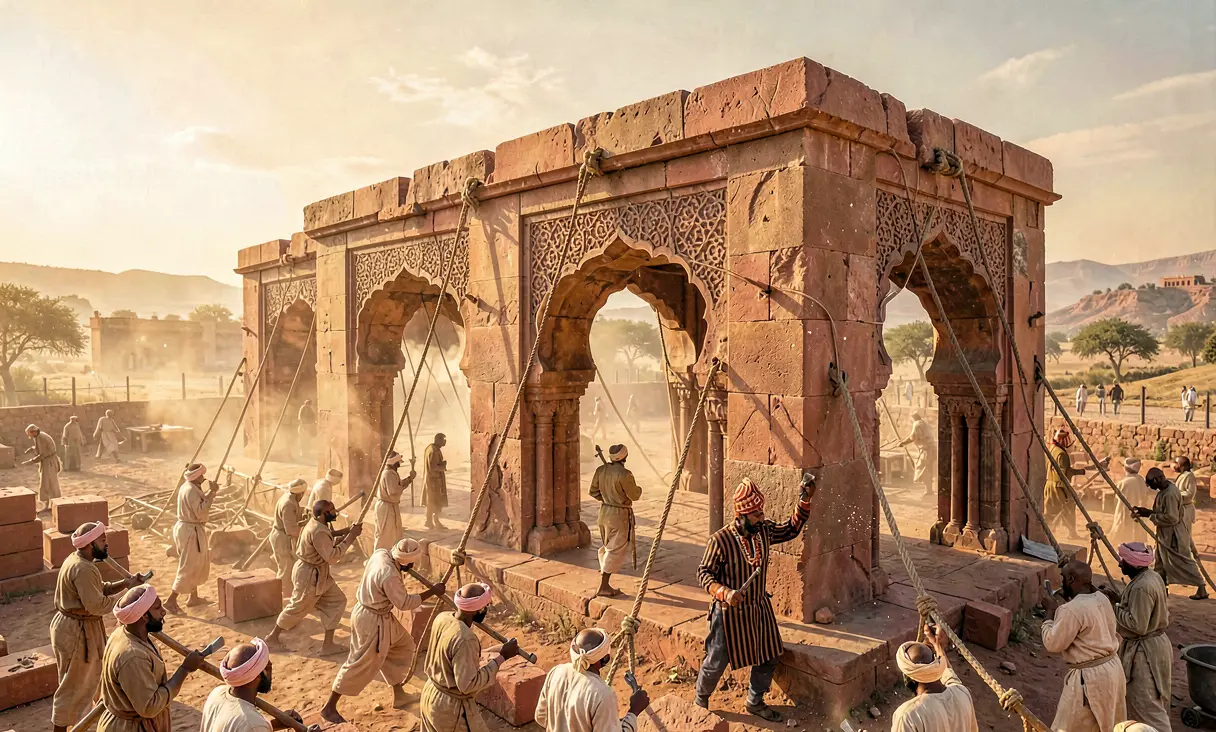
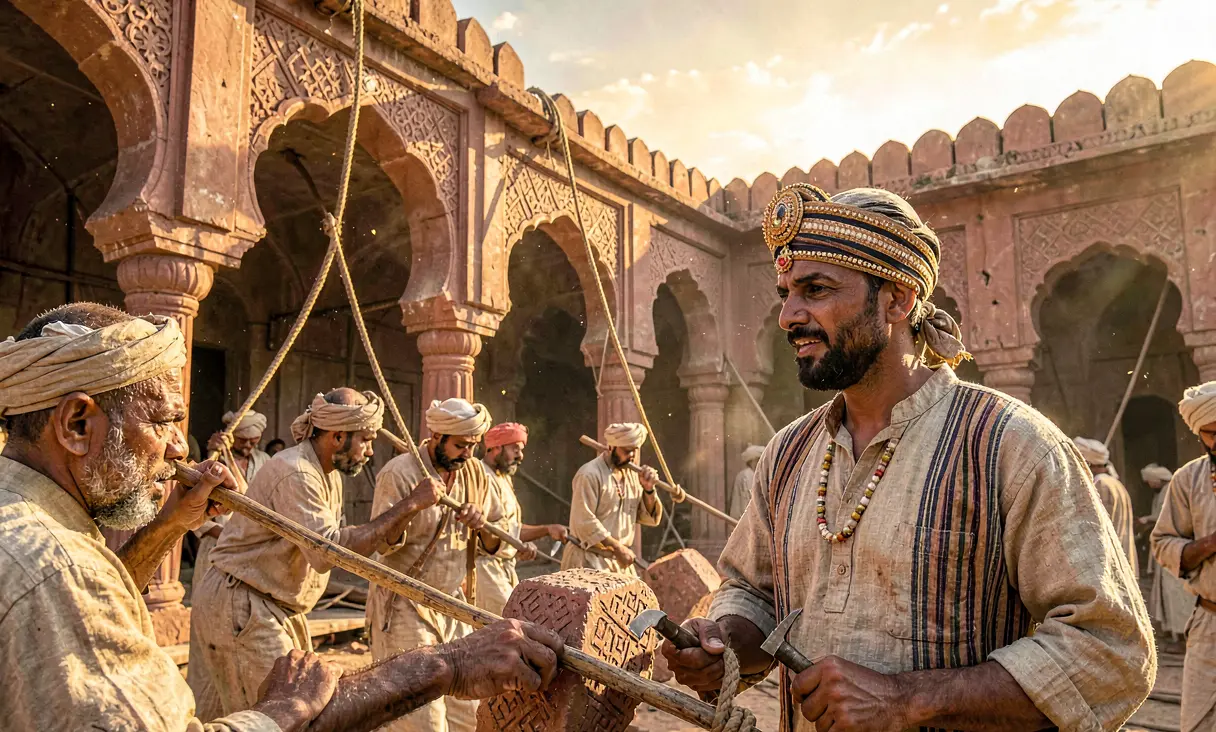
Construction began around 1571 CE, transforming the arid landscape into a magnificent imperial complex that would serve as the Mughal capital. Akbar commissioned an unprecedented architectural synthesis, blending Persian, Indian, and Islamic traditions to reflect his vision of a unified empire. The city was laid out with rigorous geometric precision, featuring palaces, administrative halls, mosques, and private quarters built primarily from red sandstone. Key structures included the Buland Darwaza (Gate of Magnificence), erected in 1576 to commemorate the Gujarat victory, which stands as one of the tallest gateways in the world at 54 meters. The Jama Masjid complex housed the tomb of Shaikh Salim Chishti, distinguished by its intricate white marble lattice screens and a design that harmonized with the surrounding red sandstone structures.
The Imperial Capital and Religious Experimentation
Fatehpur Sikri functioned as the political and cultural heart of the Mughal Empire from 1571 until approximately 1585. It was here that Akbar's court became a vibrant center for intellectual discourse, attracting scholars, theologians, poets, and artists from diverse religious backgrounds including Islam, Hinduism, Christianity, and Zoroastrianism. The city housed the Ibadat Khana (House of Worship), established in 1575, where weekly theological debates took place. These discussions eventually led Akbar to formulate Din-i-Ilahi, a syncretic spiritual movement intended to bridge religious divides, although it remained a small courtly sect rather than a mass religion. The administration of the empire was conducted from these halls, with the Diwan-i-Khas (Hall of Private Audience) serving as the stage for Akbar's unique policy of Sulh-i-Kul (universal peace).
The Sudden Abandonment
Despite its grandeur and strategic location, Fatehpur Sikri was abandoned by the imperial court in 1585, a mere fourteen years after its founding. The primary catalyst for this exodus appears to have been severe water scarcity; the city's reservoirs could not sustain the massive population of the court, army, and bureaucracy during dry seasons. Furthermore, military necessities compelled Akbar to move his capital closer to the frontiers in Punjab to manage rebellions in the northwest and campaigns in Bengal. The departure was abrupt, leaving behind a ghost city that retained its furniture, artifacts, and architectural integrity. Unlike many abandoned capitals that were stripped for materials, Fatehpur Sikri remained largely intact, frozen in time as a testament to Akbar's brief but intense experiment with a new imperial identity.
Legacy of a Forgotten Capital
Fatehpur Sikri stands today as a UNESCO World Heritage Site and one of the most significant examples of Mughal architecture. Its preservation offers historians an unparalleled glimpse into the spatial organization, artistic sensibilities, and religious complexities of Akbar's reign. The city symbolizes the height of Mughal cultural synthesis before the empire shifted its focus under subsequent rulers toward more orthodox Islamic policies. While it failed as a permanent capital due to environmental constraints, its legacy endures in the architectural language it established and the historical memory of Akbar's attempt to forge a cohesive Indian identity through religious tolerance and administrative innovation.
Fatehpur Sikri stands as a unique architectural testament to Akbar's syncretic vision and his attempt to create a hybrid Mughal culture.
Where it happened
Fatehpur Sikri, Uttar Pradesh, India — see it on the interactive map →
Explore related history
 PoliticsPeace of WestphaliaOctober 24, 1648 · Münster and Osnabrück, GermanyTreaties end the Thirty Years' War, establishing state sovereignty.
 PoliticsShivaji Maharaj Coronation and Maratha Empirec. 1674 CE · Raigad Fort (modern Maharashtra/India)Chhatrapati Shivaji is crowned as the sovereign ruler of the Marathas, establishing an independent Hindu kingdom against Mughal dominance.
 PoliticsThe Glorious RevolutionNovember 5, 1688 · London, EnglandParliament invites William of Orange to depose James II, establishing constitutional monarchy.
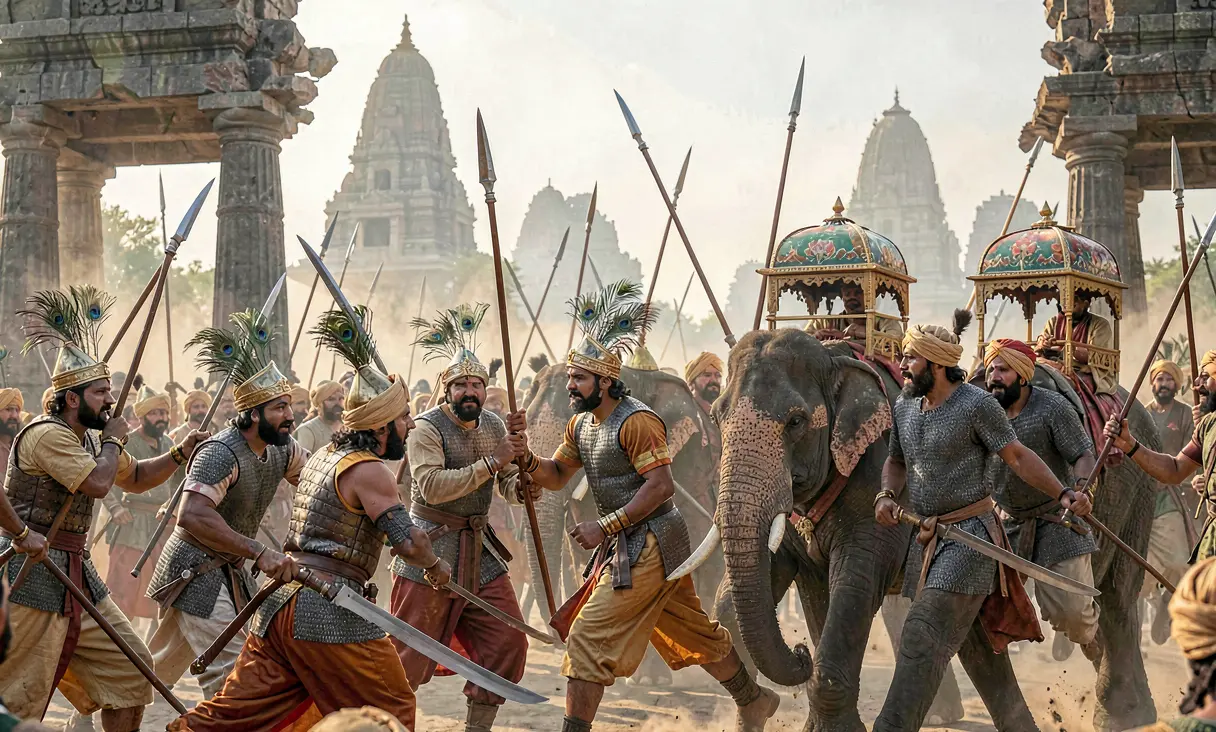 WarBattle of Talikota and Fall of Vijayanagarac. 1565 CE · Talikota, Karnataka, IndiaThe Deccan Sultanates defeat the Vijayanagara Empire in a decisive battle, leading to the sack of Hampi and the empire's collapse.
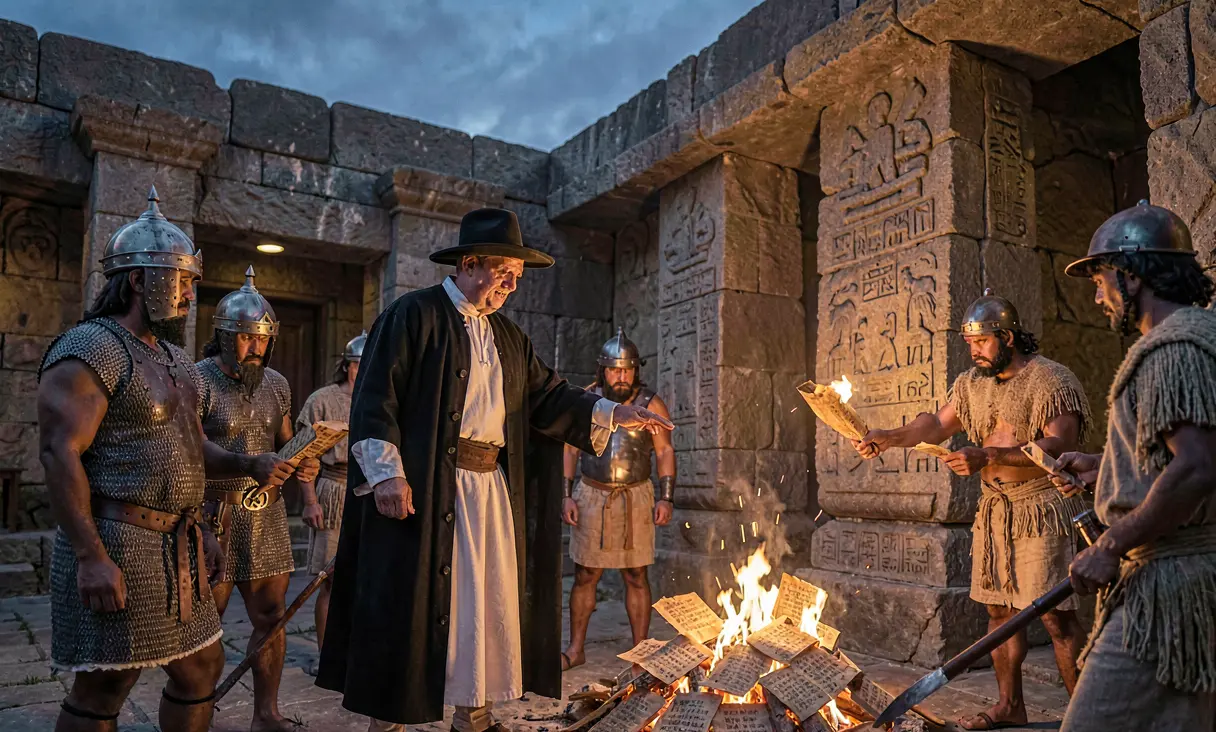 DisasterBurning of Maya Codices by Bishop LandaJuly 1562 CE · Mani, Yucatan, MexicoSpanish Bishop Diego de Landa orders the destruction of most surviving Maya written records in a campaign against idolatry.
 DisasterDestruction of Maya Codices by Bishop LandaJuly 12, 1562 · Maní, Yucatán, MexicoSpanish friars burn nearly all surviving Maya books in a purge of idolatry.
Discussion
Loading…